Can Tree Roots Damage Sewer Lines? A Guide for Austin Homeowners
Learn how tree roots can infiltrate and damage sewer lines in Austin. Warning signs, prevention strategies, and when root removal is the right solution.
Jake Mitchell
ISA Certified Arborist & Stump Removal Specialist
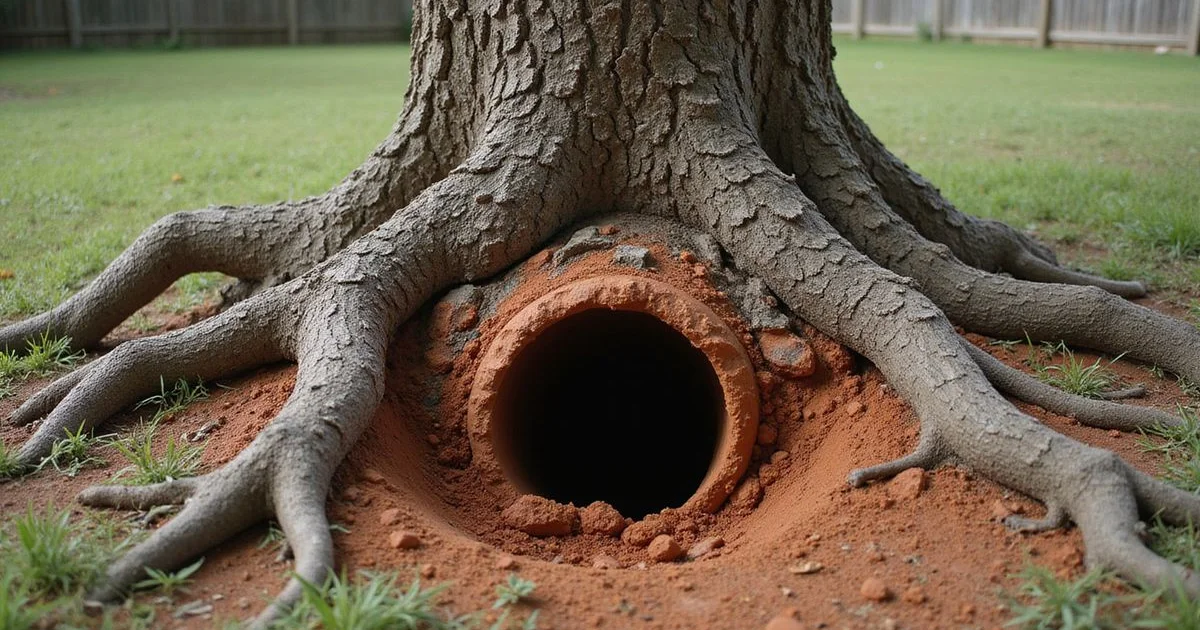
You know how a perfectly green patch of grass during a dry summer usually points to an underground leak? When clients ask about this issue, “Can Tree Roots Damage Sewer Lines? A Guide for Austin Homeowners” is the exact resource our professional service team provides to explain the situation.
The American Society of Civil Engineers reports that over 50% of sewer blockages nationwide happen because of root intrusion.
This staggering 2026 data highlights a massive vulnerability for local properties.
We will break down the exact warning signs and walk through practical solutions to protect your property.
Can Tree Roots Damage Sewer Lines? A Guide for Austin Homeowners
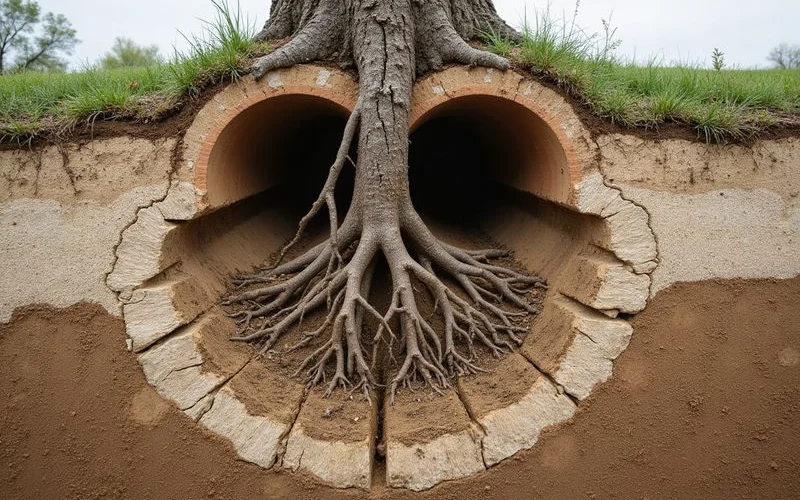
Roots naturally seek out moisture, nutrients, and oxygen. Your underground plumbing provides a constant supply of all three elements. Even a perfectly sealed pipe emits tiny amounts of water vapor through microscopic joint gaps.
Our experience shows that roots detect these moisture trails from surprisingly far away. Professional tree root removal is often the only permanent solution once intrusion begins. Once a tiny feeder root finds a crack or loose connection, it slips inside and multiplies rapidly.
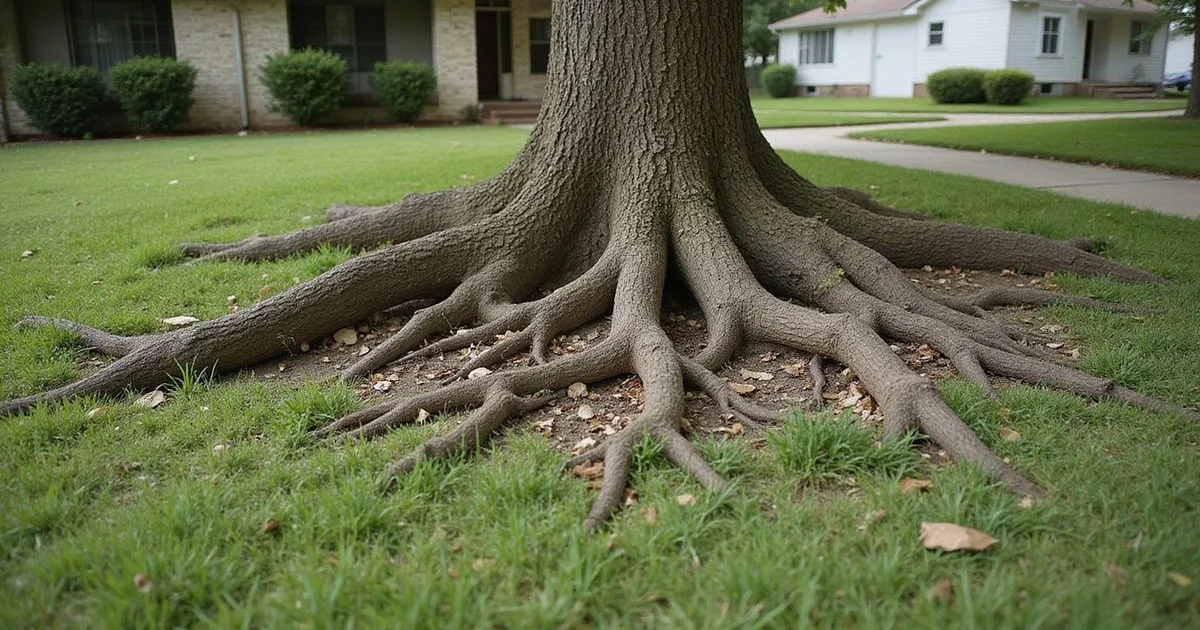
The soil conditions in Austin make this search for water highly aggressive. Heavy clay soils in East Austin and limestone-dense ground in West Austin force root systems to spread horizontally. A mature tree planted 30 feet from your house can easily send roots straight into your plumbing.
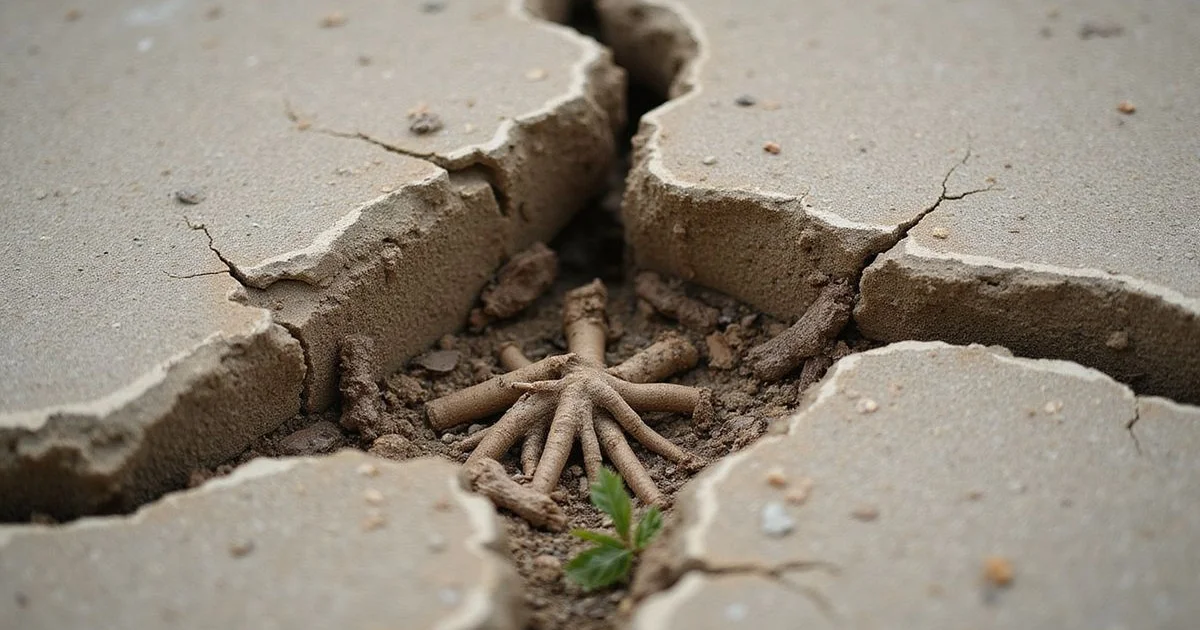
A single feeder root, often no thicker than a human hair, is all it takes to breach an aging sewer line and start a massive blockage.
Warning Signs of Root Intrusion
Catching the problem early is the absolute best way to avoid a full system replacement. Complete sewer line replacements in Austin currently range from $3,000 to over $15,000 depending on the damage. Watch for these specific indicators that trouble is brewing underground.
Slow Drains Throughout the House
A single slow sink usually means a localized clog. Multiple drains running slowly at the same time point directly to an obstruction in your main line. Roots create a thick net inside the pipe that catches grease, paper, and daily waste.
We often see homeowners spend hundreds of dollars on liquid drain cleaners before realizing roots are the actual culprit. Mechanical snaking to clear these blockages typically costs between $350 and $600 per visit.
Gurgling Sounds from Toilets
A partial root blockage traps excess air inside the plumbing system. You might hear distinct gurgling or bubbling sounds coming from your toilet bowls. This noise usually happens when you run water in a nearby sink or bathtub.
Our technicians consider this one of the earliest audible warnings of a compromised pipe. Act quickly if you hear these sounds to prevent a complete backup.
Sewage Backups and Foul Odors
A severe blockage forces wastewater back up into your lowest drains. Ground-floor showers and basement drains are usually the first places to overflow.
Sewage backups expose your family to several serious hazards:
- Harmful Bacteria: Raw sewage introduces dangerous pathogens into your living space.
- Sewer Gases: Trapped methane and hydrogen sulfide can cause severe respiratory irritation.
- Property Damage: Contaminated water quickly ruins flooring, drywall, and baseboards.
You might also notice strong, foul smells wafting from your yard near the plumbing path. This odor is a clear signal that contaminated water is seeping into the soil.
Sinkholes or Wet Spots in the Yard
Cracked pipes leak constant moisture directly into the surrounding dirt. This continuous fertilization creates unusually lush, green patches of grass on your lawn. You might also find soft, sunken sinkholes along the path between your house and the street.
We recommend walking your yard monthly to check for these suspicious wet spots. Catching these leaks early prevents the root system from expanding further. Our guide on tree roots damaging foundations in Austin covers related structural risks.
Austin’s Aging Sewer Infrastructure
Established neighborhoods like Hyde Park, Bouldin Creek, Travis Heights, and Allandale feature decades-old plumbing. Builders standardly installed clay or Orangeburg pipes from the 1940s straight through the 1970s. These older materials are highly vulnerable to crushing and root penetration.
Our crews frequently replace Orangeburg pipes across the city. Manufacturers made Orangeburg out of compressed wood pulp and hot tar pitch. Plumbers originally expected these pipes to last 50 years, but many fail entirely after just 30 years of use.
At-risk plumbing materials commonly found in older Austin homes include:
- Orangeburg Pipe: Made from fibrous wood pulp and hot pitch, this material becomes extremely brittle over time.
- Clay Tile Pipe: Features frequent joints every few feet that easily separate during Texas ground shifts.
- Cast Iron: Susceptible to heavy corrosion and bottom-channeling, creating easy entry points for moisture-seeking roots.
A pre-1980 home with original plumbing faces an extremely high risk of an underground breach.
Which Trees Are the Worst Offenders
Some species pose a much higher risk to your plumbing than others. We recommend planting water-loving or rapid-growing species at least 40 to 50 feet away from any known utility lines. The following species are notorious in Central Texas for destroying underground pipes.
- Live Oak: The most iconic local tree features massive root systems that extend far beyond the visible canopy.
- Silver Maple: These trees grow incredibly fast and possess shallow, aggressive roots that hunt relentlessly for water.
- Willow: Any willow variety aggressively pursues moisture and will easily crush older clay pipes.
- Hackberry: These common trees produce dense underground networks that infiltrate loose joints with ease.
- Pecan: Mature pecan trees grow extensive root systems capable of traveling 50 feet to find a leaking pipe.
Schedule a professional assessment if any of these varieties grow within 25 feet of your home. In urgent situations, emergency stump removal can prevent further pipe damage. Early intervention gives you the most options for pipe preservation.
Root Barrier Solutions
Homeowners who want to preserve their landscaping can install protective barriers. These barriers sit in the soil between the trunk and your plumbing to redirect underground growth.
Physical Root Barriers
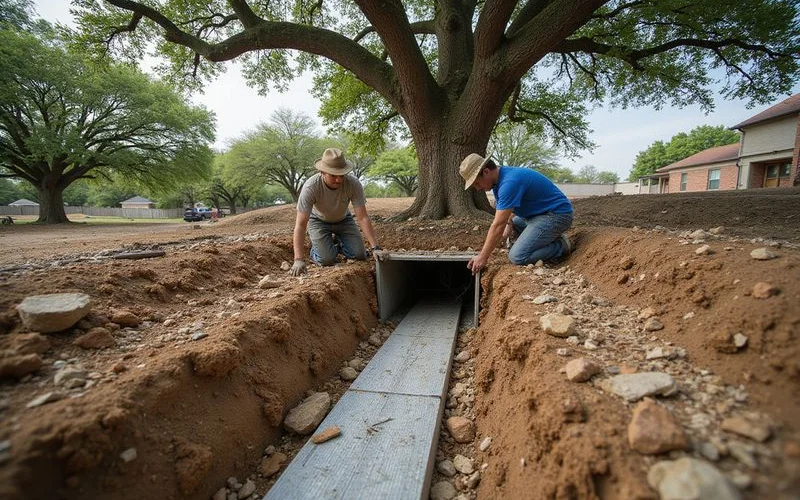
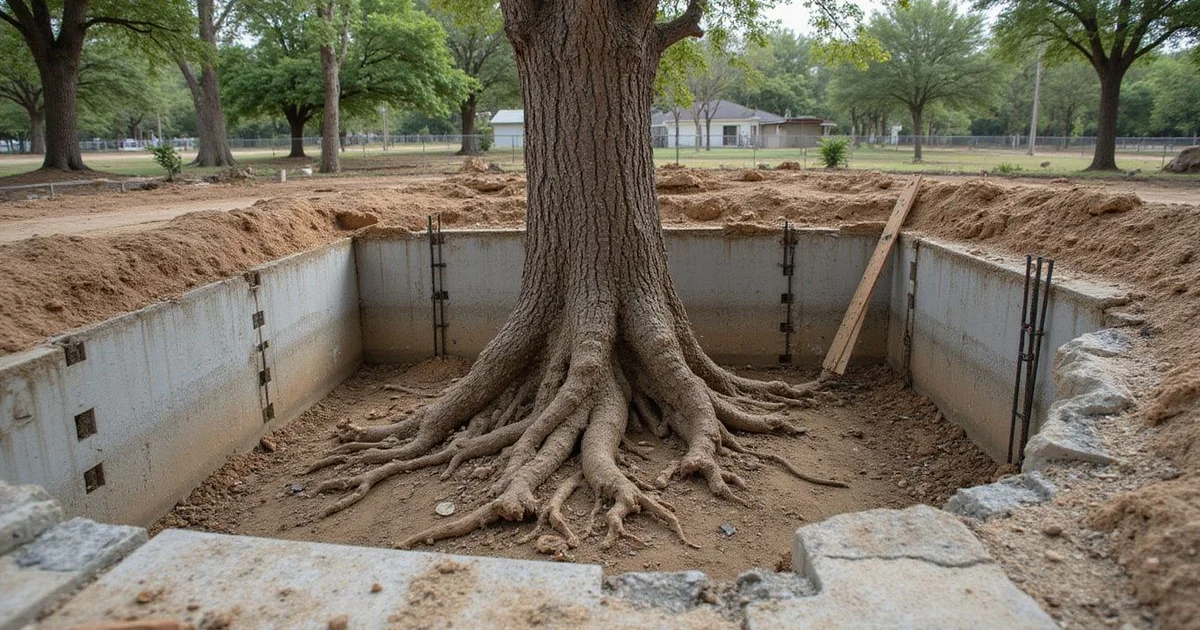
Installers place heavy-duty plastic sheets or geotextile fabric vertically inside a trench. The barrier must reach at least 24 inches deep to effectively block growth in Texas clay. A properly installed physical shield can protect your pipes for 15 to 20 years.
Chemical Root Barriers
Modern chemical solutions offer a highly effective alternative to digging trenches. We strongly recommend using foaming products like RootX instead of toxic copper sulfate treatments. RootX utilizes a safe aquatic herbicide called dichlobenil that kills growth on contact.
The foaming action strips away grease and prevents new roots from entering the pipe for up to 12 months. This method protects your plumbing without harming the actual tree above ground.
Root Barrier Comparison
| Feature | Physical Root Barriers | Chemical Root Barriers (e.g., RootX) |
|---|---|---|
| Installation Method | Trench digging and panel insertion | Foaming agent poured directly into the pipe |
| Lifespan | 15 to 20 years in Texas soil | Requires reapplication every 12 months |
| Ideal Use Case | Protecting new pipes during installation | Clearing existing pipes without yard excavation |
When to Remove the Tree or Stump
Total removal is sometimes the only permanent fix for a compromised plumbing system. This step is crucial when a tree is actively dying or sits too close to the foundation for a barrier.
Our team knows that cutting down the trunk is only half the battle. You must completely grind out the remaining stump with professional stump grinding to stop the problem.
A living stump will continue pushing new growth toward your pipes for years, while decomposing roots from a dead stump create empty underground channels. Water flows easily through these vacant paths and erodes the supporting soil right out from under your pipes.
Leaving a dead tree stump in the ground provides a continuous roadmap for water to erode the soil around your newly repaired plumbing.
We can assist you directly if a tree has already destroyed your plumbing. The right tree root removal services eliminate the source of the problem safely and efficiently. Our technicians coordinate with local plumbers to ensure the entire network is cleared without harming the newly repaired pipe.
Connecting Root Removal with Plumbing Inspection
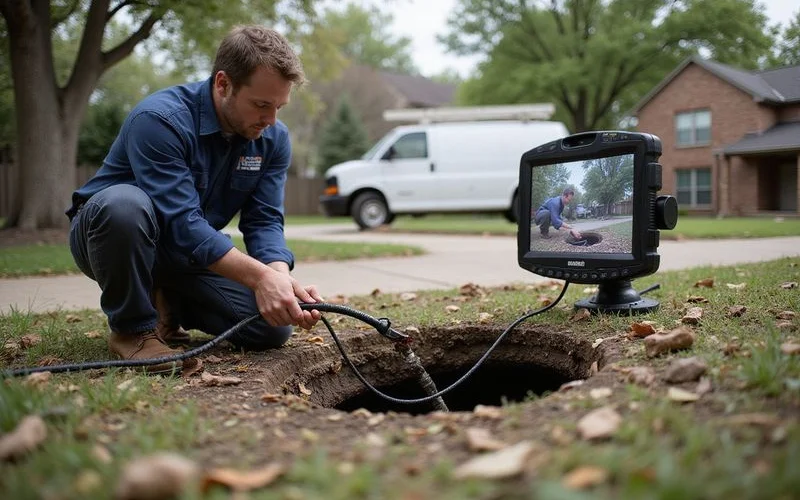
Coordinating your landscape work with a plumbing inspection is the smartest strategy for property owners. You should have a licensed plumber run a camera through the line before and after the landscape work. This documentation proves the obstruction is gone and reveals the true condition of the pipe.
Many Austin plumbing companies typically charge between $150 and $300 for a detailed camera inspection. This small upfront investment provides clear visual evidence of the damage. Plumbers can then determine if you need a spot repair or a modern trenchless CIPP (cured-in-place pipe) lining.
Schedule your stump grinding service as soon as the plumbing assessment is complete. Contact us today for a free evaluation of your property. We will help you build a comprehensive plan that protects both your landscape and your underground investments.
Conclusion
Understanding the risks associated with underground growth empowers you to make smarter maintenance decisions. You do not have to wait for a disastrous backup to take action.
Proactive steps today will save you from spending thousands of dollars on emergency excavation tomorrow.
“Can Tree Roots Damage Sewer Lines? A Guide for Austin Homeowners” provides the blueprint, but the next step is yours. Call our team this week to schedule a thorough property assessment and secure your peace of mind.
Jake Mitchell
ISA Certified Arborist & Stump Removal Specialist
Jake Mitchell is an ISA Certified Arborist with 12 years of experience in Central Texas tree services. He specializes in stump grinding, root system management, and yard restoration for Austin-area homeowners.
Related Articles
Ready to Remove That Stump?
Get a free, no-obligation quote from a vetted Austin stump grinding professional today.