Stump Liability on Commercial Properties: What Austin Business Owners Must Know
Understanding stump-related liability for Austin commercial properties. Trip hazards, ADA compliance, insurance risks, and why timely removal matters.
Jake Mitchell
ISA Certified Arborist & Stump Removal Specialist
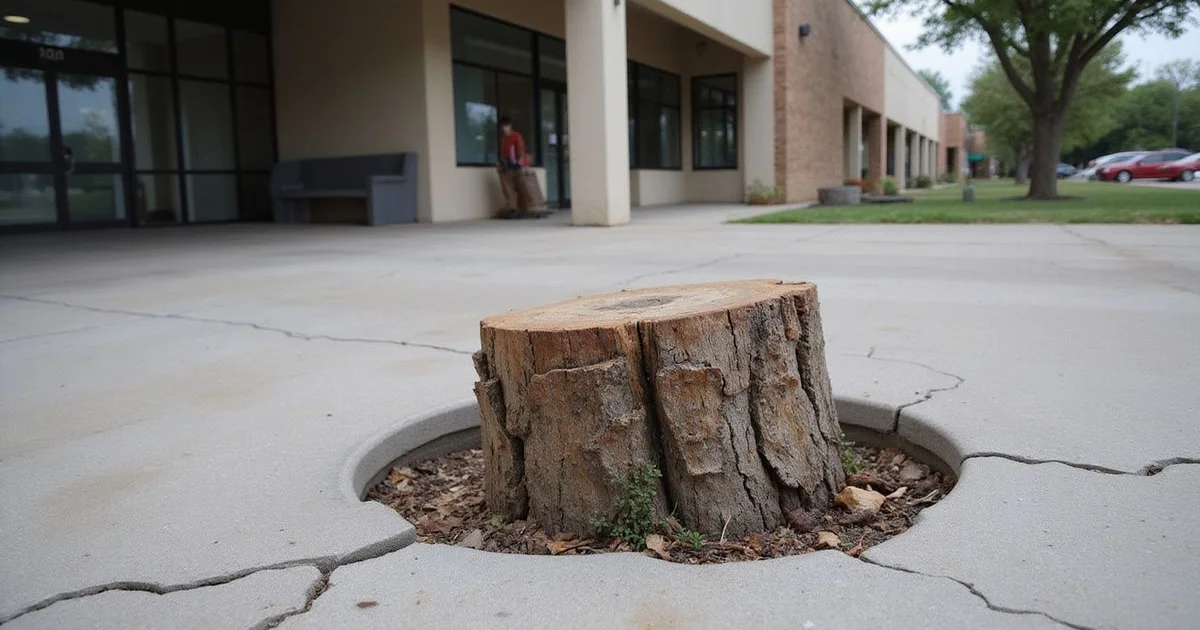
You already know that maintaining a commercial site involves balancing a dozen different safety priorities.
If you want to understand stump liability on commercial properties, what Austin business owners must know is that overlooked roots frequently become the most expensive blind spots for property managers. They represent a genuine legal and financial liability that business owners simply cannot afford to ignore. Professional commercial stump grinding eliminates these risks entirely.
Those old cut trees do much more than just ruin your landscaping aesthetics. A single protruding root system easily triggers premises liability lawsuits or severe ADA compliance violations.
We will break down exactly how Texas law views these hazards and examine the actual financial risks involved. Then, we will walk through a few practical ways to document your property maintenance and handle removal properly.
Trip Hazard Liability Under Texas Law
Under Texas premises liability statutes, a commercial property owner must maintain their property in a reasonably safe condition. Our team deals with these risk assessments regularly. The law specifically classifies your retail customers and business guests as “invitees.”
This legal status grants them the highest duty of care possible under state law. Identifying and correcting known hazards is absolutely mandatory.
A tree stump in a parking lot, walkway, or landscaped area that people regularly pass through is a textbook example of a known hazard. Texas follows a “proportionate responsibility” rule, often called the 51% bar rule. If a court finds your business 51% or more at fault for an accident, you pay the damages.
If someone trips over a stump on your commercial property and is injured, you face potential liability if:
- You knew or should have known the stump was there (you almost certainly did)
- The stump presented an unreasonable risk of harm (stumps in walkways clearly do)
- You failed to take reasonable steps to correct the hazard (removing the stump)
The Cost of a Trip-and-Fall Lawsuit
Recent 2026 legal data shows the average premises liability settlement in Texas for a typical trip-and-fall injury ranges from $15,000 to $85,000. Serious injuries involving broken bones, head trauma, or injuries to elderly individuals can result in settlements or verdicts well over $500,000.
Compare that to the cost of commercial stump grinding, which typically runs $150 to $500 per stump. The math is overwhelmingly in favor of removal.
ADA Compliance for Walkways and Parking Areas
The Americans with Disabilities Act sets specific standards for accessible routes on commercial properties, and tree stumps can easily put you in violation.
Accessible Route Requirements
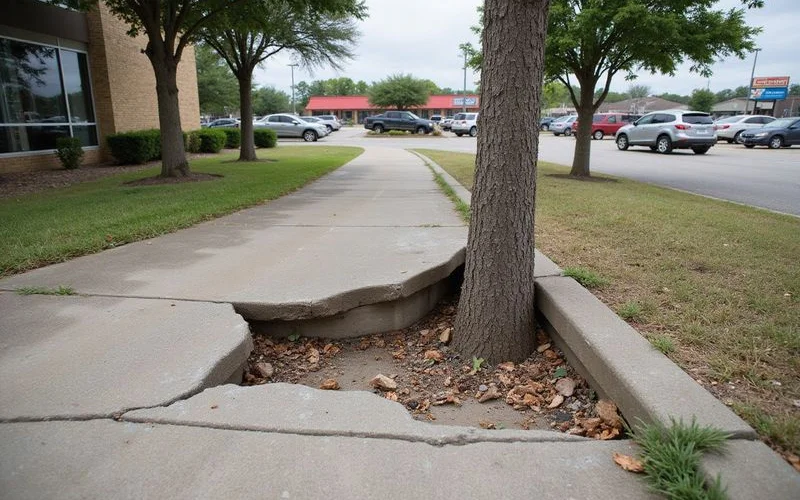
ADA guidelines require that accessible routes, including walkways, parking lot paths, and building entrances, be firm, stable, and free of obstructions. A tree stump or raised root system in an accessible route is a clear federal violation.
The surface must remain perfectly level at all times. Any changes in elevation of more than a quarter inch without a beveled edge violate these strict accessibility standards.
Stump Roots and Sidewalk Damage
Even after a tree is cut down, the root system continues to grow for years. Complete tree root removal is often necessary to prevent recurring damage. Roots from old stumps routinely lift sidewalks, crack parking lot surfaces, and create uneven walkways.
Our crews constantly see this issue specifically with Central Texas tree varieties. In Austin, where Live Oak, Hackberry, and Pecan root systems are notoriously aggressive, this is an ongoing problem at commercial properties across the city.
Enforcement and Penalties
ADA violations quickly result in complaints to the Department of Justice, private lawsuits, and significant financial penalties. While the original statutory maximum for a first-time ADA violation is $75,000, recent inflation adjustments mean actual Department of Justice fines can now reach approximately $115,000.
Subsequent violations push those penalties even higher. Beyond government fines, the legal defense costs alone can devastate a small business budget.
Insurance Implications of Unaddressed Hazards
Your commercial property insurance is designed to protect you from liability claims, but leaving known hazards unaddressed undermines that protection entirely.
Policy Exclusions and Denial
Many commercial property insurance policies include provisions that limit or exclude coverage for claims arising from hazards the policyholder knew about but failed to address. If you have documented evidence that a stump was identified as a hazard months before an injury occurred and you did nothing about it, your insurer may deny the claim.
Our consultants warn clients about this exact scenario during property evaluations. Insurers aggressively look for reasons to limit their coverage payouts.
Premium Increases
Even when a claim is covered, it will likely increase your insurance premiums at renewal. Following the severe convective storms in Austin during May 2025, insurance carriers tightened their underwriting standards significantly.
Commercial property insurance premiums can increase 10 to 30 percent following a liability claim. This rate hike typically persists for three to five years. Multiple claims make it incredibly difficult to find coverage at any price.
Standard Commercial General Liability policies often cap out at a $1 million limit per occurrence. A single severe injury from a trip hazard can exhaust that limit, leaving your business assets completely exposed.
Risk Management Documentation
Smart commercial property owners treat stump removal as part of their risk management program. Document your regular property inspections, any hazards identified, and the corrective actions taken.
This documentation demonstrates that you take your duty of care seriously. It becomes critical evidence if a plaintiff ever files a claim against your business.
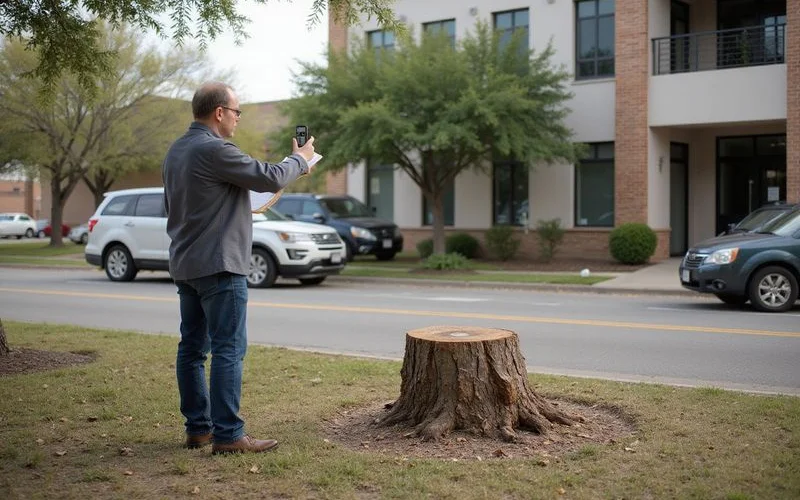
Documenting Stump Removal for Liability Protection
Proper documentation of stump identification and removal creates a paper trail that protects your business.
Digital Tracking and Evidence
Our team always recommends using property management software, such as AppFolio or Buildium, to create digitally timestamped logs. Creating a verifiable timeline is the absolute best way to prove you acted responsibly under Texas law.
Before and After Removal Standards
Establish a clear protocol for every hazard you identify on the grounds. Here is a breakdown of exactly what you need to record to maintain a strong legal defense.
| Documentation Phase | Required Actions for Liability Protection | Key Details to Include |
|---|---|---|
| Before Removal | Photograph every stump with a date stamp. | Location, approximate size, proximity to walkways. |
| During Inspection | Log the hazard in your maintenance software. | Date discovered, assigned priority level, contractor contacted. |
| After Removal | Photograph the exact same location. | Show the hazard is gone and the ground is level. |
| Final Records | File the contractor paperwork permanently. | Invoice, certificate of insurance, written service reports. |
Regular Inspection Schedule
Establish a quarterly or semi-annual property inspection that specifically includes checking for new stumps, root heaving, and trip hazards. Document each inspection even when no issues are found.
A consistent inspection record serves as powerful evidence that you maintain your property responsibly.
When Stumps Become Urgent Safety Issues
Some situations require immediate attention rather than waiting for scheduled maintenance.
High-Traffic Areas
A stump near a building entrance, in a parking lot, or along a primary walkway should be treated as an urgent removal. These are the locations where injuries are most likely to occur and where your liability exposure peaks.
After Storm Damage
Austin storms frequently knock down trees, leaving fresh stumps in areas where they were not expected. The intense storms of early 2025 left hundreds of dangerous commercial property hazards overnight.
After any significant storm, inspect your property promptly. You must arrange for emergency stump removal of any stumps in areas accessible to the public.
Near Playground or Recreation Areas
If your commercial property includes playground equipment, sports courts, or other recreational facilities, stumps in or near these areas require immediate removal. Texas courts apply severe scrutiny to injuries involving children.
The legal concept of an “attractive nuisance” means you can be held highly liable if a child gets hurt playing on or around a dangerous stump.
Commercial Property Owner Responsibilities
As a commercial property owner in Austin, you have specific responsibilities related to property maintenance and hazard management.
City Code Compliance
The City of Austin requires commercial property owners to maintain their properties in a safe condition. Code compliance officers actively issue notices of violation for hazardous conditions, including stumps that present tripping hazards.
Failure to address a code compliance notice can result in substantial daily fines. These penalties sometimes reach up to $2,000 per day for specific severe health and safety violations.
Tenant Lease Obligations
If you lease commercial space to tenants, review your lease agreements to understand who is responsible for exterior maintenance and hazard remediation. Our property partners often use triple-net (NNN) leases where the tenant covers maintenance costs, but the owner still holds the ultimate premises liability.
In many standard commercial leases, the property owner retains sole responsibility for common areas, landscaping, and exterior safety. Make sure your lease clearly assigns responsibility for tree and stump maintenance.
Regular Maintenance as a Defense
The single best defense against stump-related liability claims is a documented history of regular property maintenance. When you can demonstrate that you conduct regular inspections, promptly address hazards, and work with qualified contractors, you significantly reduce your legal exposure.
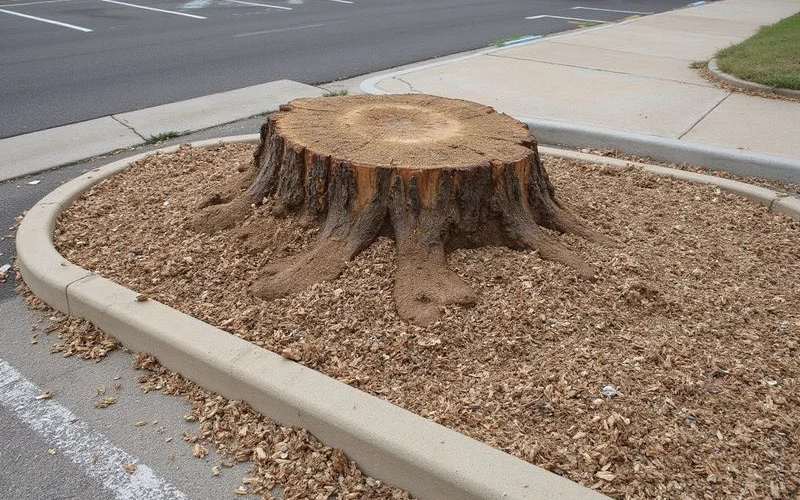
Cost of Removal vs. Cost of a Lawsuit
The financial comparison between stump removal and liability exposure makes the decision straightforward.
Comparing the Financial Risks
Our pricing data highlights exactly why proactive maintenance saves money. Instead of risking a massive settlement, a small investment in maintenance eliminates the hazard entirely.
| Expense Category | Typical 2026 Cost Range |
|---|---|
| Small Stump Grinding (under 12 inches) | $100 to $200 |
| Medium/Large Stump Grinding | $200 to $800 |
| Average Trip-and-Fall Settlement | $15,000 to $85,000 |
| First-Offense ADA Violation Penalty | Up to $115,000 |
| Legal Defense Costs (Even if you win) | $5,000 to $25,000 |
The math is clear. Removing a stump for a few hundred dollars is a fraction of the cost of a single liability claim.
For commercial properties with multiple hazards, the savings from bulk removal make it even more economical. Professional stump grinding instantly upgrades your property safety and limits your exposure.
Take Action Now
If your Austin commercial property has stumps that need removal, do not wait for an incident to force your hand.
Contact Austin Stump Grinding Pros for a free commercial property assessment.
We carry full commercial insurance and provide detailed documentation for your records. Professional technicians on staff offer competitive pricing for commercial stump grinding projects of any size to keep your business fully protected.
Jake Mitchell
ISA Certified Arborist & Stump Removal Specialist
Jake Mitchell is an ISA Certified Arborist with 12 years of experience in Central Texas tree services. He specializes in stump grinding, root system management, and yard restoration for Austin-area homeowners.
Ready to Remove That Stump?
Get a free, no-obligation quote from a vetted Austin stump grinding professional today.