HOA Stump Grinding: A Guide for Austin Property Managers
Guide for Austin HOA boards and property managers on planning and budgeting stump grinding for community properties. Bulk pricing, scheduling, and compliance.
Jake Mitchell
ISA Certified Arborist & Stump Removal Specialist
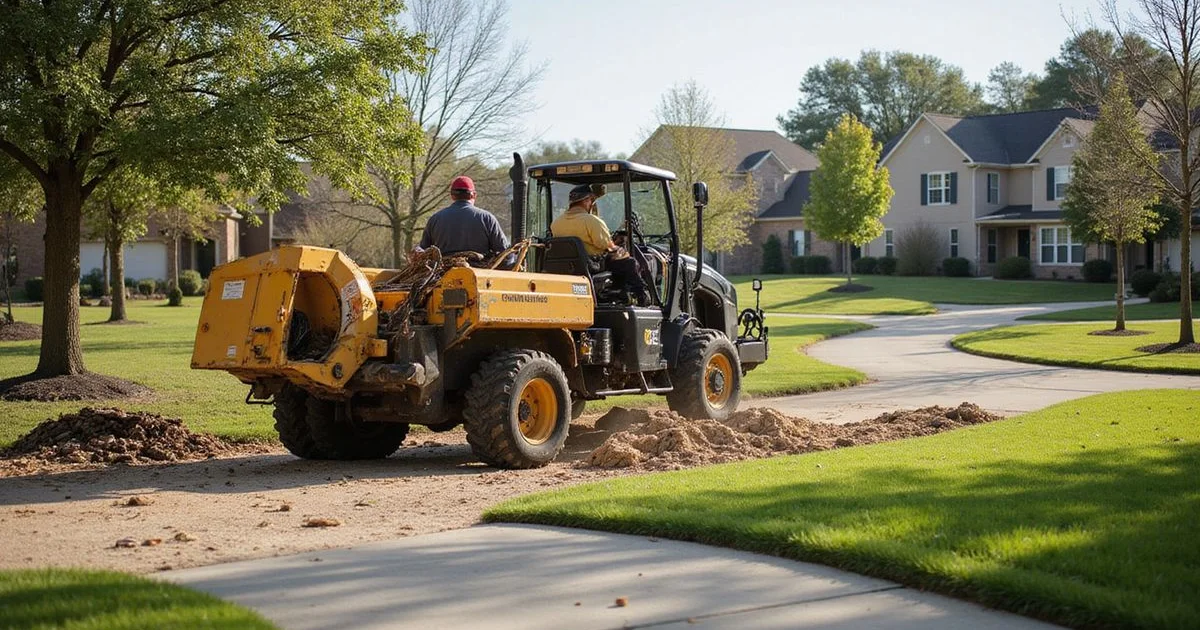
We see the reality daily: managing stump removal across an HOA community is entirely different from pulling a single stump from a residential backyard. Balancing tight budgets with resident expectations takes careful coordination.
Our team knows that Austin property managers face unique practical challenges in these shared spaces. Professional commercial stump grinding services handle the scale and compliance requirements of these projects.
Consider this resource your official HOA Stump Grinding: A Guide for Austin Property Managers. This article walks through exactly how to plan and execute these projects efficiently.
Understanding HOA Stump Grinding: A Guide for Austin Property Managers
Texas HOAs face a unique set of stump-related challenges that individual homeowners simply do not encounter. Recent city reports show Austin boasts a 41 percent tree canopy cover. This dense coverage means falling branches and dying trees are a constant reality for property managers.
Common Areas and Green Spaces
Parks, playgrounds, picnic areas, and open green spaces act as the centerpieces of most Austin HOA communities. When trees in these areas require removal due to disease, storm damage, or age, the resulting stumps turn into immediate tripping hazards. Communities like those in Circle C Ranch, Avery Ranch, and Steiner Ranch often feature dozens of mature trees in common areas. Accumulating stumps over the years creates persistent aesthetic and safety issues.
Medians and Streetscapes
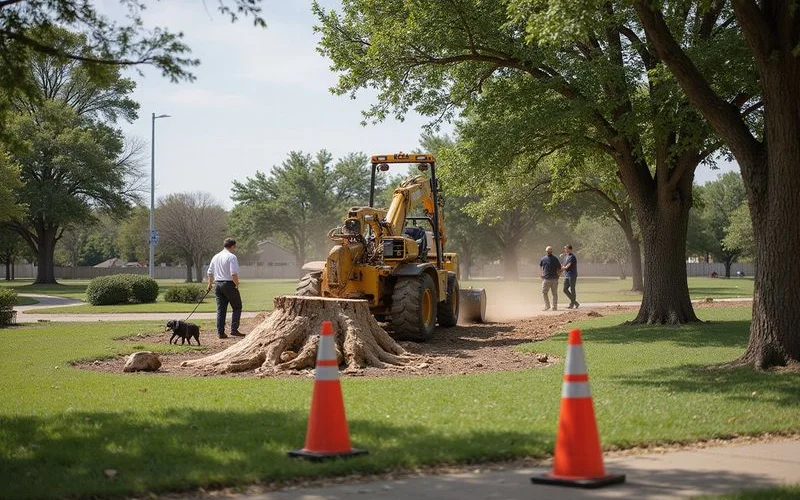
Tree-lined medians and entry features provide a major selling point for many Austin subdivisions. When median trees die, the stumps require prompt removal to maintain the community’s premium curb appeal. Removing stumps near active roadways involves specific logistical steps:
- Securing proper right-of-way permits from the city.
- Deploying high-visibility traffic control signage.
- Protecting nearby underground irrigation lines from heavy machinery.
Working near active roadways adds significant difficulty to the removal process.
Walking Trails and Pathways
Many Austin HOA communities feature extensive trail systems. Stumps near trails represent a significant liability concern because they create serious tripping hazards for walkers, joggers, and cyclists. Prompt stump grinding prevents avoidable injuries.
Budgeting for Annual Stump Maintenance
Smart HOA boards build stump grinding into their annual maintenance budget rather than treating it as a surprise expense. We always advise clients to look at historical data first. Reviewing your community’s tree removal history from the past three to five years provides a solid baseline for future costs.
Establishing a Stump Grinding Line Item
If your HOA removes an average of eight to twelve trees per year, you must budget for the corresponding stump grinding as a separate line item. Current 2026 data shows average Austin residential stump grinding costs range from $150 to $500 per stump. Small stumps under 12 inches typically cost $100 to $200. You should allocate at least $200 per stump for planning purposes when using bulk community rates.
Reserve Fund Considerations
Our recommendation for large communities with extensive tree canopies is to include a stump maintenance allocation directly in the reserve study. Aging communities face a particular challenge right now. Large trees planted during the original development phase are now reaching the end of their lifespan and require removal in increasing numbers.
Annual vs. As-Needed Approach
Some HOAs grind stumps as soon as trees are removed. Others accumulate stumps over the course of a year and schedule one bulk grinding project annually.
| Approach | Pros | Cons |
|---|---|---|
| As-Needed Grinding | Immediate aesthetic improvement, zero lingering trip hazards | Higher per-stump cost, frequent noise disruptions |
| Annual Bulk Grinding | Lowest per-stump cost, single mobilization fee | Stumps sit in common areas for months |
The annual bulk approach almost always costs less per stump because contractors save on mobilization costs. Most Austin HOA boards find a quarterly or semi-annual schedule strikes the right balance between cost savings and community appearance.
Getting Board Approval
Stump grinding projects typically require board approval, especially when spending from reserve funds or entering into maintenance contracts. We know that presenting a clear, data-driven case makes this process much smoother. Presenting a visual inventory usually secures faster sign-off.
Building Your Case
Present the board with a clear inventory of current stumps, including their exact locations and current condition. Include photos and a mapped overview. Highlighting any stumps that pose safety or liability risks will often fast-track approval. Provide at least two competitive quotes and a recommended vendor with a clear rationale for your choice.
Framing the Investment
Position stump grinding as a necessary combination of liability reduction, property value maintenance, and resident satisfaction. Board members respond incredibly well to specific financial comparisons. A strong pitch sounds like this: “We have 14 stumps in common areas, and three pose trip hazards near the playground. Bulk grinding will cost $1,800 total compared to $3,200 if done individually over time.”
Insurance Requirements for Commercial Work
HOA stump grinding strictly qualifies as commercial work. The insurance requirements for these projects are far more stringent than standard residential jobs. We refuse to work on commercial properties without comprehensive coverage in place. Texas law contains a massive loophole that HOAs must handle carefully.
The Texas Loophole Risk
Texas remains the only state where workers’ compensation insurance is not mandatory for private employers. Hiring an uninsured tree service puts your HOA at immense financial risk if a worker gets injured on your property. You must demand proof of coverage to protect your community from devastating lawsuits.
What to Require From Contractors
Any contractor grinding stumps on HOA property should carry specific policies. Requesting certificates of insurance before any work begins is absolutely essential. Our guide on choosing a stump grinding contractor in Austin covers the full vetting process.
- General liability insurance of at least $1 million per occurrence.
- Workers’ compensation insurance for all crew members.
- Commercial auto insurance for equipment transport.
- The HOA should be listed as an additional insured on the contractor’s general liability policy.
Damage Liability
Stump grinding near irrigation systems, underground utilities, and landscaping carries a real risk of incidental damage. A reputable contractor will provide a clear policy for repairing any damage caused during the work. Get this guarantee in writing as part of your official contract.
Scheduling Around Community Events
HOA communities maintain a busy social calendar that residential properties do not share. Stump grinding involves loud, disruptive machinery that needs thoughtful scheduling. Our crews adhere strictly to local ordinances to keep your residents happy. The City of Austin enforces specific rules regarding construction noise.
Noise and Access Considerations
Austin noise ordinances limit typical construction noise strictly to the hours between 7:00 AM and 6:00 PM, Monday through Saturday. Schedule grinding during these weekday business hours when most residents are away at work. Avoid weekends, holidays, and community events entirely to prevent noise complaints. Post notices to affected residents at least one week in advance.
Seasonal Timing
The absolute best time for HOA stump grinding in Austin is late fall through early spring. Cooler temperatures mean less lawn stress from heavy equipment traffic. Community outdoor activities also hit their lowest point during these months. Avoid scheduling during Austin’s peak storm season from April through June when new tree damage might create additional stumps.
Bulk Pricing Strategies
HOA communities hold significant leverage when negotiating stump grinding pricing. We frequently help property managers structure deals that maximize their maintenance budgets. Bundling services is the easiest way to unlock these savings.
Volume Discounts
With 10 or more stumps, most Austin stump grinding contractors offer volume discounts of 30 to 40 percent compared to their standard residential rates. The more stumps you bundle into a single project, the lower the per-stump cost becomes.
Multi-Year Contracts
Consider negotiating a multi-year maintenance contract with a preferred vendor. A two or three year agreement with a fixed per-stump rate gives the HOA predictable costs. This arrangement often yields the best pricing and guarantees a reliable response time from the contractor.
Bundling With Other Tree Services
If your HOA also needs general tree maintenance, bundling stump grinding with these services produces additional savings. Many tree service companies offer lucrative package pricing for communities that use them for multiple arborist needs. Popular bundled services include:
- Routine deadwood removal and canopy lifting.
- Emergency storm damage clearing.
- Preventative Oak Wilt treatments.
This combined approach drastically reduces vendor mobilization fees.
Setting Up a Maintenance Contract
A well-structured maintenance contract protects both the HOA and the tree service contractor. We recommend clearly defining every expectation before signing any paperwork. Ambiguity in commercial contracts usually leads to costly disputes later.
Key Contract Terms
Your stump grinding maintenance contract should include several specific provisions.
- Per-stump pricing by diameter range (small, medium, large, extra-large).
- Response time for new stump grinding requests (for example, within 14 business days).
- Grinding depth specification (minimum six to eight inches below grade allows for proper replanting).
- Cleanup standards (chips spread on-site, hauled away, or professional backfill and regrading with topsoil).
- Insurance requirements and formal additional insured status.
- Term and renewal provisions with defined pricing adjustment caps.
Documenting Completed Work
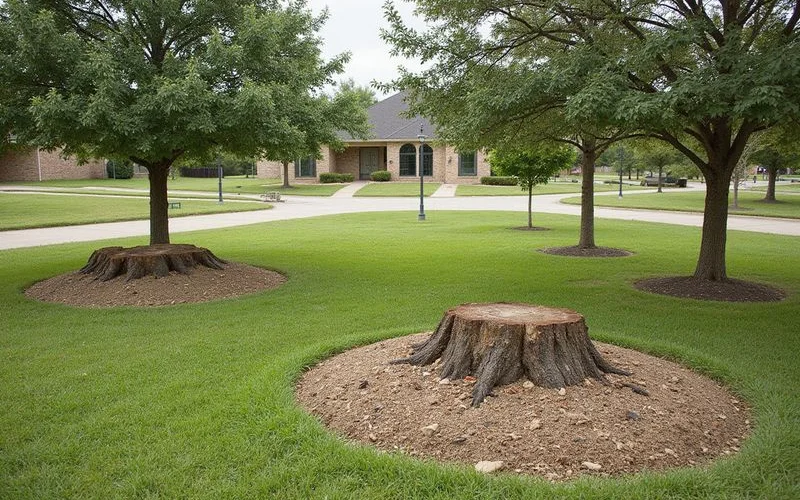
Require the contractor to provide before and after photos of each stump along with a written completion report. This documentation protects the HOA in case of future disputes over property damage. These records also provide excellent material for board meetings and annual budget reporting.
Getting Started
If you found value in this HOA Stump Grinding: A Guide for Austin Property Managers, start by conducting a full stump inventory of your common areas. Then contact Austin Stump Grinding Pros for a free community assessment and bulk pricing quote. We work with HOA boards and property management companies throughout the Austin metro area. Understanding the insurance, scheduling, and approval requirements for commercial stump grinding projects is what we do best. Let us help you restore your community spaces safely and affordably.
Jake Mitchell
ISA Certified Arborist & Stump Removal Specialist
Jake Mitchell is an ISA Certified Arborist with 12 years of experience in Central Texas tree services. He specializes in stump grinding, root system management, and yard restoration for Austin-area homeowners.
Ready to Remove That Stump?
Get a free, no-obligation quote from a vetted Austin stump grinding professional today.