Ice Storm Tree Damage in Austin: Recovery and Stump Removal Guide
How to recover from ice storm tree damage in Austin. From emergency stump removal to long-term yard restoration after severe winter weather.
Jake Mitchell
ISA Certified Arborist & Stump Removal Specialist
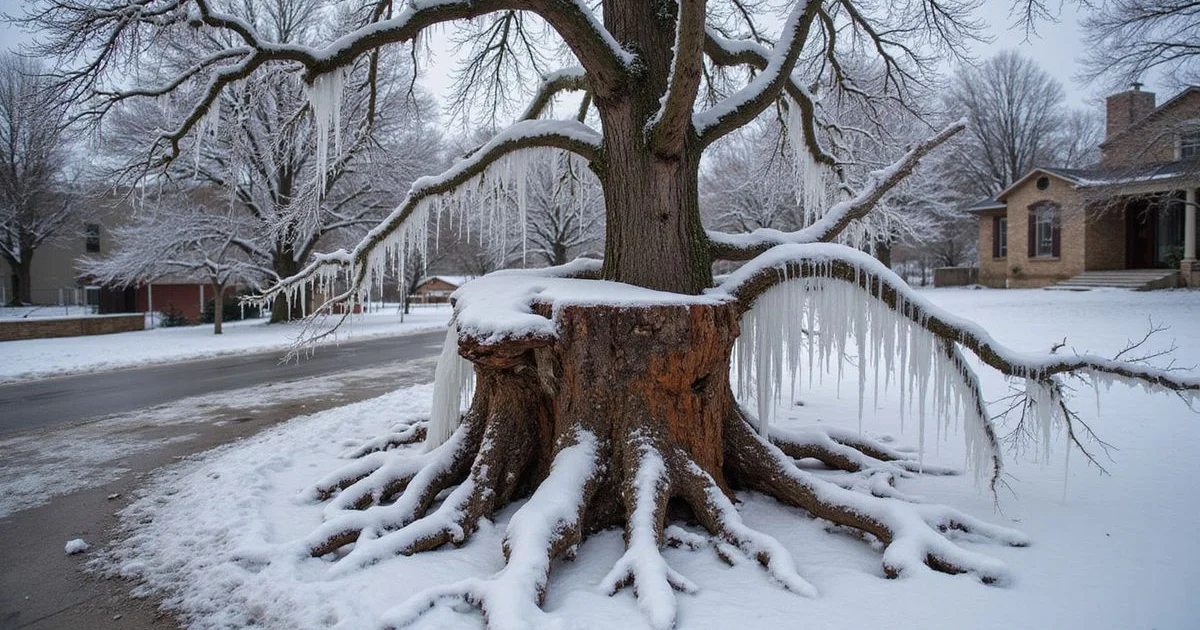
Our crews have surveyed countless properties after major freezes, and the structural failure is always shocking. This Ice Storm Tree Damage in Austin: Recovery and Stump Removal Guide outlines the exact steps to restore your property safely.
Seeing massive limbs scattered across yards completely changes how people view landscape maintenance.
We notice that property owners often underestimate the lingering effects of these events. The resulting debris often requires emergency stump removal and leaves behind a complicated mess that requires professional attention.
The following sections break down the specific causes of failure and the exact protocols to protect your home.
Ice Storm Tree Damage in Austin: Recovery and Stump Removal Guide Overview
Wind storms usually topple trees at the base or snap trunks at obvious weak points. The damage is dramatic but usually concentrated in one area.
Ice works through a completely different physical mechanism. The frozen rain accumulates gradually on every single branch, twig, and leaf surface.
Our arborists know that this accumulation creates a staggering amount of weight. Data from Austin Resource Recovery shows that just half an inch of ice can add 500 pounds to a single tree limb. This distributed weight causes branches to bend, crack, and eventually fail.
Instead of one clean break, an ice-damaged canopy often loses dozens of branches from every angle. We constantly see massive oaks completely disfigured after these storms. The result is a mangled tree with a severely compromised structure.
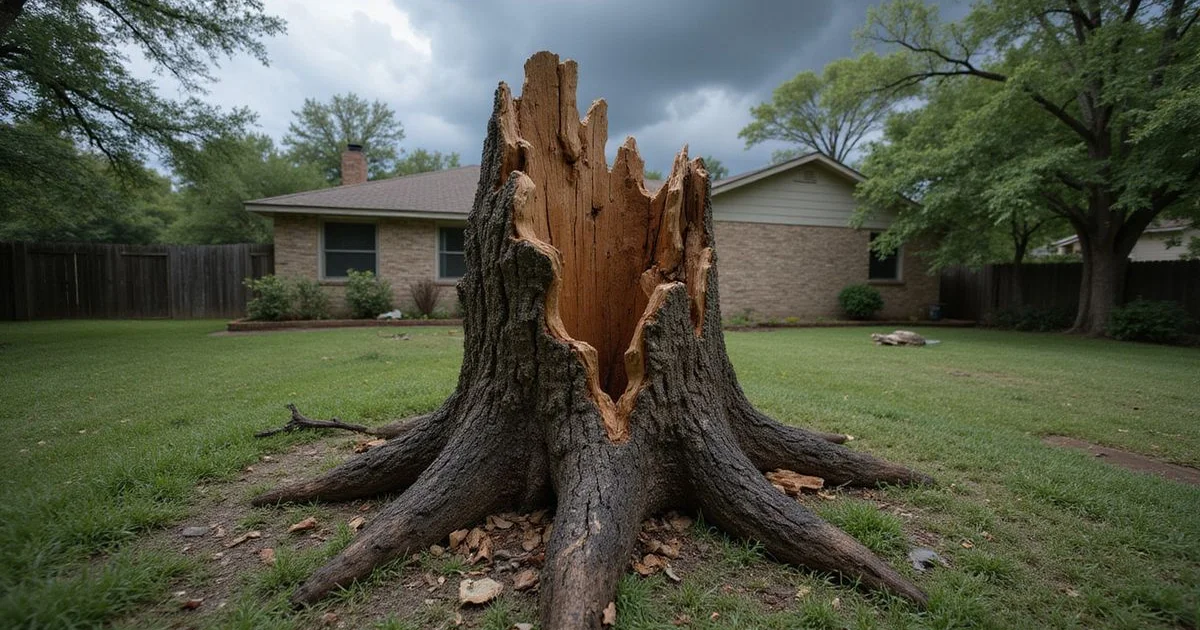
You might need to remove the tree entirely, or it might snap at mid-trunk. That leaves a tall, jagged stump that is both unsightly and dangerous.
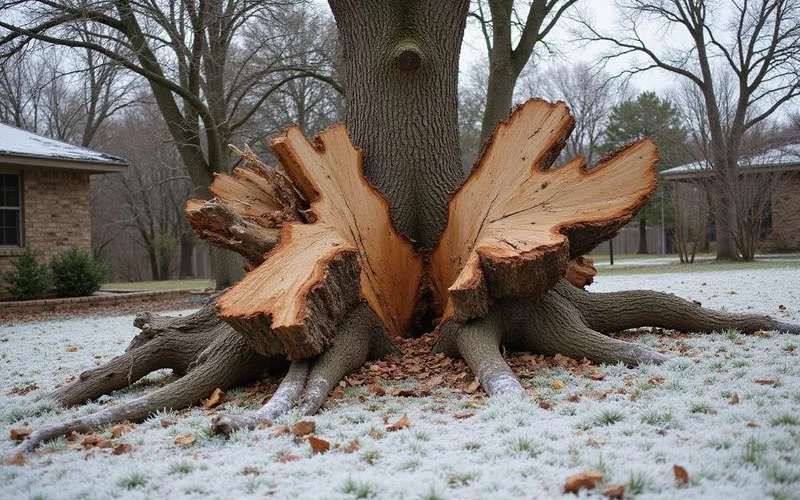
Austin’s Ice Storm History
While freezing rain is relatively rare in Austin compared to cities further north, these events do happen. Each freeze reminds us how vulnerable our urban canopy truly is.
February 2021 Winter Storm Uri
The February 2021 freeze remains the most devastating winter weather event in modern Austin history. Temperatures dropped to single digits for multiple consecutive days.
Ice accumulation reached up to half an inch across the metro area. Tens of thousands of trees were damaged or destroyed.
The City of Austin estimated it would take years to fully address the resulting debris. Our local crews spent months grinding down the massive stumps left behind from that specific freeze. Many homeowners are still dealing with the leftover damage today.
January 2023 Winter Storm Mara
A less severe but highly destructive ice event hit Central Texas in early 2023. Freezing rain and sleet accumulated heavily on trees that were already stressed from the 2022 drought.
Our team saw the true scale of the destruction directly during the cleanup. The city eventually collected 167,180 tons of storm debris from residents, which equals roughly 23,338 truckloads.
The Texas A&M Forest Service estimated that 31 percent of Austin’s entire urban canopy took damage during the 2023 storm.
This event particularly affected trees in South Austin and the Hill Country areas west of the city.
The Pattern Going Forward
Climate data suggests that extreme winter weather events in Central Texas might happen more often. Preparing your landscape for these events is becoming an essential part of Austin homeownership.
Knowing exactly how to respond when branches fall will save you time and money.
Which Austin Trees Are Most Vulnerable to Ice
Not all tree species handle heavy loads the same way. Knowing which trees on your property are most at risk helps you plan ahead and respond quickly.
Cedar (Ashe Juniper)
Cedar trees are everywhere in the Austin area, and they are extremely vulnerable to freezing rain. Their dense foliage catches and holds moisture exceptionally well, and their wood is quite brittle.
A large cedar loaded with weight can split apart dramatically. This often leaves a tall stump with sharp, splintered edges that requires professional removal.
We pull heavy equipment into hundreds of yards each year just to manage these shattered cedars. The cleanup process always requires heavy chainsaws and commercial chippers.
Pecan
Mature pecan trees feature wide, spreading canopies with long branches that act as leverage points under heavy loads. The branch structure makes them prone to losing major limbs.
The entire canopy can fail during severe events. Pecan stumps are among the hardest to grind because the wood is extremely dense. Our guide on pecan tree stump removal in Texas covers this challenge in detail.
Live Oak
Live oaks are generally tough and wind-resistant, but their thick evergreen canopy accumulates freezing rain rapidly. The weight on a large live oak canopy can exceed what even their strong branch unions can support.
Live oak wood is exceptionally hard. Grinding a mature stump requires specialized, high-horsepower machinery to avoid destroying the cutting teeth.
Live oaks that survive often need extensive pruning. The ones that do not survive leave massive stumps that require heavy-duty grinding equipment.
Ash Trees
Ash trees present a unique hazard during winter freezes. Many older ash trees in Austin neighborhoods built in the 1960s and 1970s are nearing the end of their natural lifespans and have brittle wood.
Our crews frequently respond to emergency calls for split ash trees after a hard freeze. You should specifically monitor your ash trees for:
- Cracked branch unions: Look for visible splitting where major limbs meet the trunk.
- Emerald Ash Borer signs: Watch out for D-shaped exit holes from this invasive insect, which severely weakens the structure.
- Permit requirements: Check if you need a Dead, Disease, and Imminent Hazard permit from the city before removing a protected-size tree.
Hackberry and Cedar Elm
Both of these common Austin trees have relatively weak wood that cracks easily under heavy loads. They tend to lose branches rather than toppling entirely.
Severe damage can make the remaining structure unsound and a candidate for immediate removal.
Immediate Steps After an Ice Storm
Once the precipitation stops and conditions are safe enough to go outside, you must evaluate your property carefully. Follow these specific steps in order.
Wait for the Thaw
Do not attempt to shake branches or pull down hanging limbs while they are still frozen.
The added vibration can cause immediate structural failures, and falling debris is highly unpredictable. Wait until temperatures rise above freezing and the melting process begins naturally.
Assess Damage from a Distance
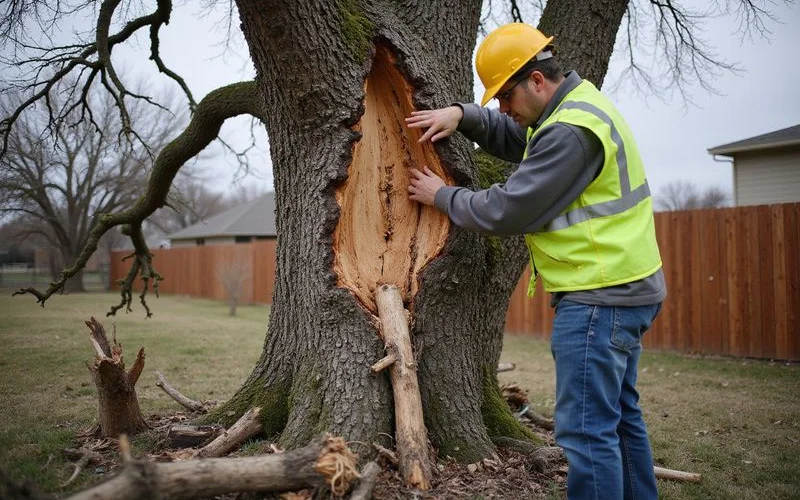
Walk your property and identify every damaged trunk without getting directly underneath compromised canopies.
Note which ones have lost major limbs, which have split trunks, and which have been completely destroyed. Take detailed photos and videos of everything for your insurance records.
Identify Immediate Hazards
Prioritize addressing trunks and stumps that pose an immediate safety threat. This includes heavy branches leaning over structures, broken trunks hanging over driveways, and exposed root systems near utility lines.
Never attempt to clear branches that are tangled in utility lines or touching the electrical drop to your house. Always call the utility provider first.
These situations call for emergency stump removal and should be addressed as soon as possible.
Handle Debris Removal Legally
Do not dump broken branches in unauthorized areas. Austin and Travis County residents can drop off large branches and tree limbs at the Hornsby Bend Biosolids Management Plant.
Our drivers rely on this specific facility during peak disaster recovery periods. If you hire a professional service, verify that they haul the debris to a legitimate processing center rather than leaving it on your curb.
Contact Your Insurance Company
File a claim promptly and provide your photographic documentation. Tree damage is generally covered under the same provisions as other storm events, but policy specifics vary widely.
Get written confirmation of your coverage limits before authorizing major clearing work.
Coordinating Tree Removal with Stump Grinding
After a major freeze, many property owners hire one company to cut down damaged trunks and then wait weeks to deal with the leftover bases. This fragmented approach creates several immediate problems:
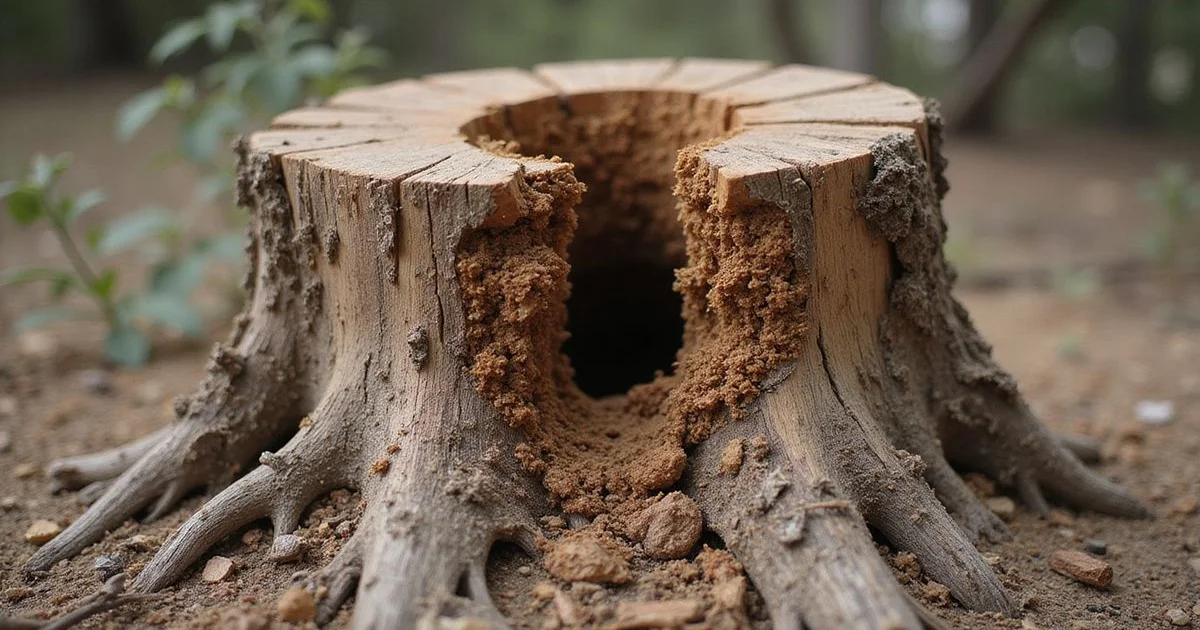
- Pest Infestations: An open, splintered base provides an ideal habitat for carpenter ants, bark beetles, and termites.
- Delayed Recovery: Waiting for the final grinding extends the time your property looks like a disaster zone.
- Insurance Complications: Many policies have strict time limits on claims, making coordinated work much easier to document.
Our experience shows that scheduling both services together saves property owners significant money. The average cost for professional stump grinding in Austin currently ranges from $150 to $500 per stump, depending on the diameter and wood hardness. A mature live oak base will cost more than a small cedar elm because the dense heartwood dulls the cutting teeth rapidly.
| Stump Diameter | Estimated Austin Cost (2026) | Typical Texas Species |
|---|---|---|
| Small (Under 12 inches) | $100 to $200 | Crape Myrtle, Young Cedar |
| Medium (12 to 24 inches) | $200 to $350 | Cedar Elm, Mid-size Pecan |
| Large (24 inches +) | $350 to $500+ | Mature Live Oak, Heritage Pecan |
You might feel tempted to rent a consumer-grade grinder from a local hardware store for $200 to $400 a day. These rental units simply lack the horsepower to chew through Texas hardwoods efficiently.
The most efficient approach is to schedule the felling and the stump grinding with the same company. The equipment is already on site, which lowers your total mobilization costs.
Insurance Considerations for Ice Damage
Ice storm tree damage in Austin follows the same general insurance rules as other storm events. There are a few specific policy details you must understand before filing.
- Homeowner’s policies typically cover removal when a heavy limb falls on a covered structure. Stump grinding might fall under your general debris removal provisions, but you must ask your adjuster directly.
- Most policies cap tree removal at $500 to $1,000 per tree, with an overall cap that varies by policy. For massive trunks requiring crane removal, this specific cap rarely covers the full cost.
- Trees that do not fall on structures are generally not covered for removal. You will likely pay out of pocket even if they are severely damaged and need to come down for safety reasons.
- Document the hazard clearly. Make the safety case explicitly in your claim if a split trunk poses a risk. Photos showing the proximity to structures, walkways, or play areas will strengthen your position.
Timeline for Full Recovery
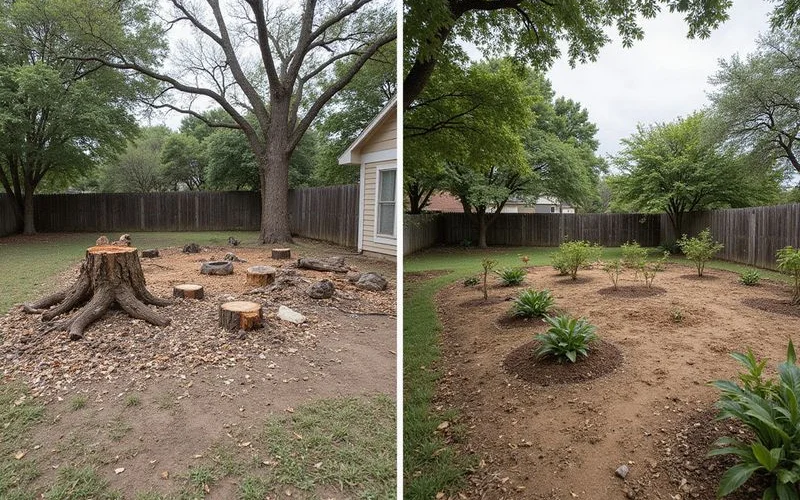
Recovering from severe canopy destruction takes deliberate planning. Here is a realistic timeline for what to expect in the Austin area:
- Week 1-2: Emergency hazard removal and initial cleanup of driveways and roofs.
- Week 2-4: Non-emergency trunk felling and professional stump grinding.
- Month 2-3: Debris hauling, professional cleanup and regrading, and fresh soil preparation.
- Month 3-6: New sapling planting, which is ideal in fall or early spring for the local climate.
- Year 1-3: New root systems establish themselves and begin filling in the yard’s canopy.
If you choose to replant, select species that are highly resistant to heavy freezing loads. Bur oak, Texas red oak, and bald cypress handle occasional heavy accumulations much better than brittle cedar or hackberry.
Our landscaping specialists highly recommend planting native species. They adapt much faster to our volatile climate swings.
Handling the aftermath of a severe winter freeze requires patience and the right equipment.
You do not have to tackle heavy, dangerous debris on your own.
Our specialists are ready to help you manage every step outlined in this Ice Storm Tree Damage in Austin: Recovery and Stump Removal Guide.
The team provides complete site services, ranging from emergency stump removal to comprehensive yard clearing.
Reach out to our office through our Contact us today page for a free assessment of your storm-damaged property.
Jake Mitchell
ISA Certified Arborist & Stump Removal Specialist
Jake Mitchell is an ISA Certified Arborist with 12 years of experience in Central Texas tree services. He specializes in stump grinding, root system management, and yard restoration for Austin-area homeowners.
Ready to Remove That Stump?
Get a free, no-obligation quote from a vetted Austin stump grinding professional today.