Lot Clearing for New Construction in Austin: A Complete Guide
Everything you need to know about lot clearing for new construction in Austin. Permits, tree protection, stump removal, and site preparation essentials.
Jake Mitchell
ISA Certified Arborist & Stump Removal Specialist
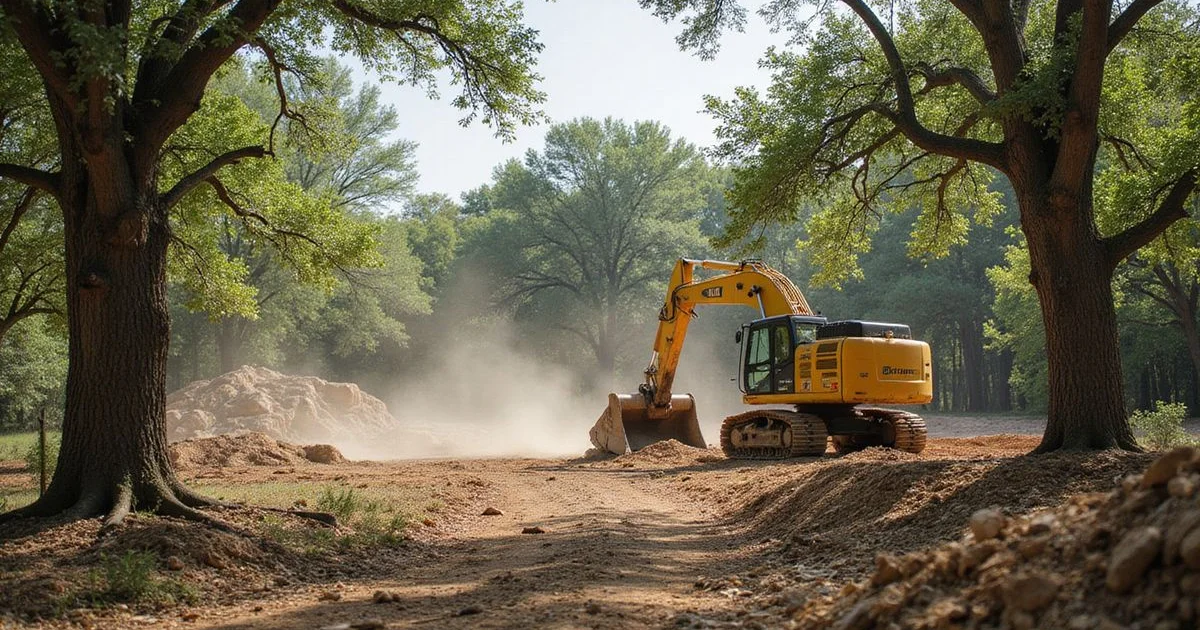
We know from experience that breaking ground in Central Texas is rarely a straightforward process. The real work begins long before the first concrete truck arrives.
Preparing a raw piece of land and executing lot clearing for new construction in Austin requires intense coordination.
Strict tree protections and environmental rules can quickly derail a project timeline in the city. A single mistake during the site prep phase can trigger massive fines and months of delays.
Our team has handled these site preparations countless times.
Here is the exact breakdown of permit requirements, tree protection protocols, and the best ways to keep your project moving forward.
Austin Permit Requirements for Lot Clearing
Building Permits and Site Plans
We always start by reviewing the city code. The Land Development Code Chapter 25-8 mandates that any lot clearing tied to new construction requires a building permit from the Development Services Department. Your site plan must show every tree on the property with a trunk diameter of eight inches or more measured at four and a half feet above ground.
Our recommendation is to map these out early in the planning phase. The current FY 2025 to 2026 fee schedule lists the residential tree plan review at $515.39. This initial review determines which trees can be removed and which must stay.
- Tree surveys: An exact map of all existing vegetation.
- Topographical data: Elevations to plan for water runoff.
- Access points: Clear paths for heavy machinery.
- Protection zones: Fenced areas for preserved trees.
Tree Removal Permits
We pay very close attention to tree sizes during the initial survey. If any tree on the lot has a diameter of 19 inches or more, the city classifies it as a protected tree. Heritage trees receive even stricter protections under local law.
“Mitigation fees for unauthorized tree removal in Austin can quickly exceed the cost of the entire site preparation project.”
These are primarily Live Oaks, Texas Ash, and Pecans with a diameter of 24 inches or more. Our operators know that removing a heritage tree without authorization triggers severe penalties. Fines easily reach up to $100,000 per tree.
You will need a separate tree removal permit for each protected tree. The city often requires replacement plantings or a direct mitigation fee. This fee currently sits at $200 per inch paid directly into the Urban Forest Replenishment Fund.
Environmental Review
We integrate environmental planning into every commercial bid. Lots near waterways, in the Edwards Aquifer recharge zone, or within the Balcones Canyonlands Preserve require additional review. The Texas Commission on Environmental Quality enforces strict rules in these areas.
Our managers often see the permitting process take several additional weeks if your property falls in any of these zones. Large developments disturbing over five acres require an Edwards Aquifer Protection Plan designed by a licensed engineer.
Heritage Tree Protection During Clearing
Critical Root Zone Fencing
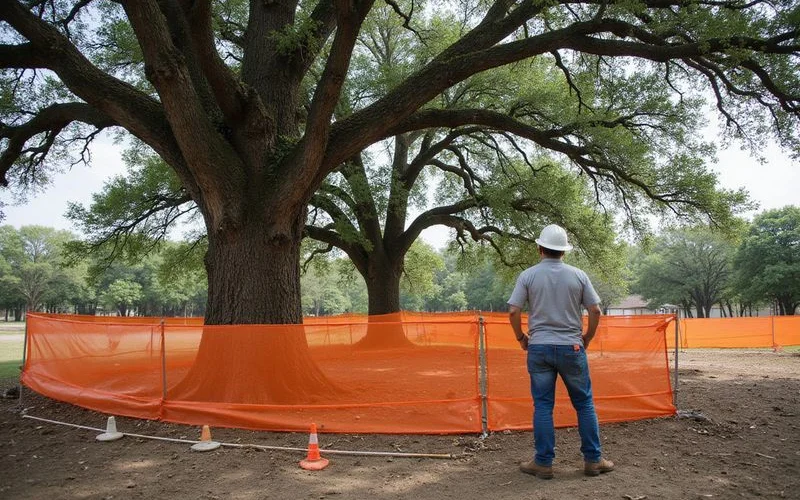
We follow precise measurements to protect the root systems of preserved trees. For every heritage or protected tree that will remain on the lot, the city requires protective fencing around the critical root zone. This zone extends one foot outward for every inch of trunk diameter.
A 24-inch Live Oak requires a 48-foot diameter circle of protection. Our crews rely on the Environmental Criteria Manual for exact fencing standards. Builders must use five-foot chain-link fencing mounted on eight-foot steel T-posts.
No equipment, material storage, or grade changes are allowed inside the quarter critical root zone. The half critical root zone only allows up to four inches of cut or fill.
Working With an Arborist
We coordinate directly with certified professionals for the initial assessment. The city often requires a formal report from an ISA Certified Arborist as part of the permitting process. An arborist evaluates tree health, identifies removal candidates, and develops a protection plan that satisfies city requirements.
These experts follow ANSI A300 standards for tree care to guarantee compliance. Our clients save money because having an arborist involved early prevents costly mistakes and permit denials.
“A certified arborist is your best defense against unexpected fines and project delays during the clearing phase.”
Stump and Root Removal for Construction
Why Stumps Must Be Fully Removed
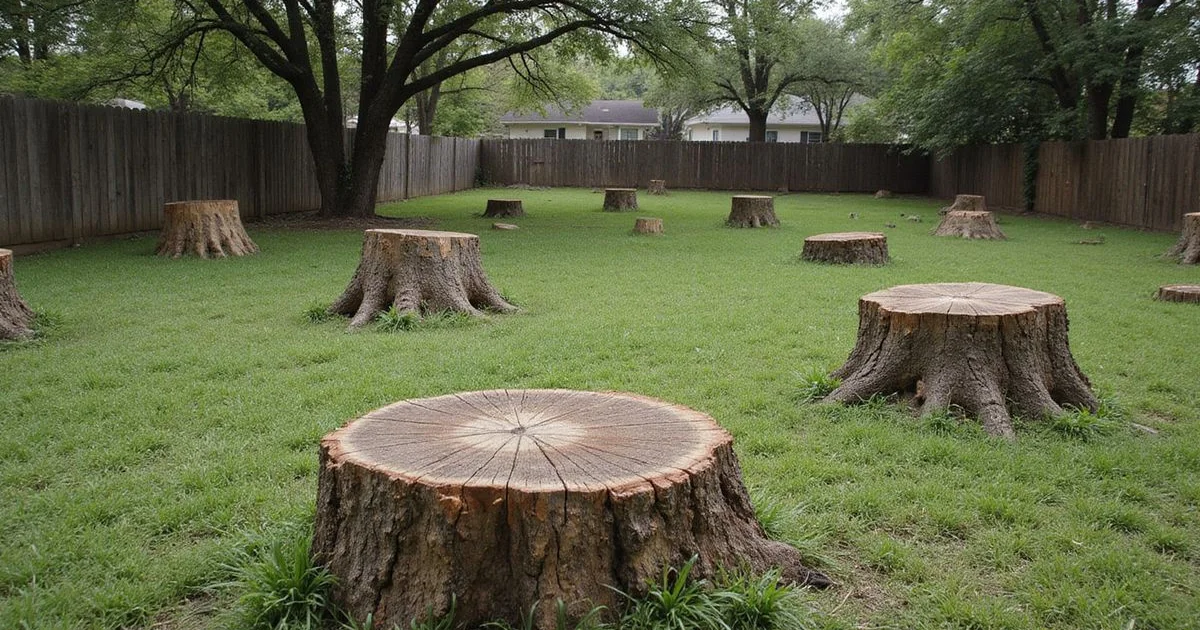
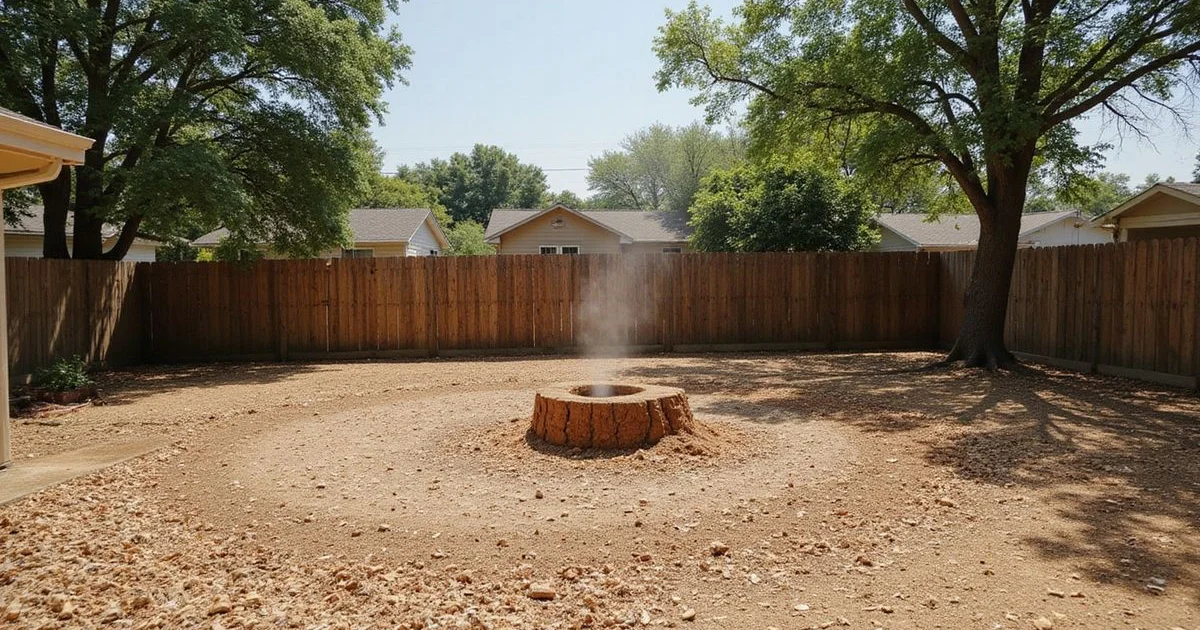
We never leave organic material under a future build site. Unlike residential stump grinding where grinding six to eight inches below grade is sufficient, new construction requires complete extraction down to 18 inches or deeper. Leaving stump material below a foundation can cause settling, cracking, and structural problems as the wood decomposes.
Our region also faces threats from wood-destroying insects. Decaying wood attracts Formosan subterranean termites. These pests are a growing problem for new homes in Central Texas, sometimes requiring emergency stump removal when infestations are discovered.
Root System Challenges in Austin Soil
We adjust our extraction methods based on the local geology. Austin soil conditions create unique root system challenges. Areas with shallow limestone bedrock like West Austin cause tree roots to spread horizontally across a wide area rather than growing deep.
This means tree root removal must extend well beyond the stump itself. Our operators face a completely different problem in East Austin. The highly expansive Del Rio Clay in that area encases roots like concrete.
Extracting them requires heavy machinery to break the soil’s grip.
Equipment for Construction-Grade Stump Removal
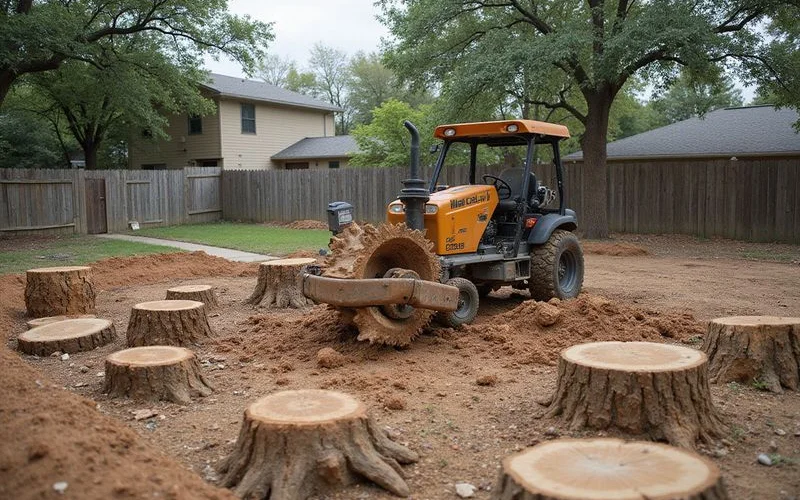
We deploy heavy-duty machinery for these demanding commercial jobs. Standard residential grinders simply lack the power for construction lot clearing. Large projects often require 250-horsepower track-mounted grinders or 20-ton excavators with dedicated stump buckets. Our multi-stump removal project guide covers efficiency strategies for high-volume clearing.
Our equipment choices depend entirely on the number of stumps, their size, and the depth of removal required. A combination of grinding and excavation is usually the most efficient approach.
- Track-mounted grinders: Ideal for clearing high volumes of medium-sized stumps quickly.
- Excavators with stump buckets: Necessary for ripping out deep taproots in dense clay.
- Forestry mulchers: Used for clearing thick brush and undergrowth before targeting the stumps.
Soil Testing and Grading
Geotechnical Soil Testing
We recommend a thorough subsurface evaluation immediately after clearing. A geotechnical engineer must test the soil to assess its bearing capacity, drainage characteristics, and any issues with expansive clay. Austin is known for clay soils that swell when wet and shrink when dry, which directly affects foundation design.
Engineers typically drill boreholes 15 to 20 feet deep to determine the soil’s Plasticity Index. Our clients usually pay between $2,000 and $4,000 for this service. This testing provides essential data for the structural engineer to design a safe foundation.
Grading and Drainage
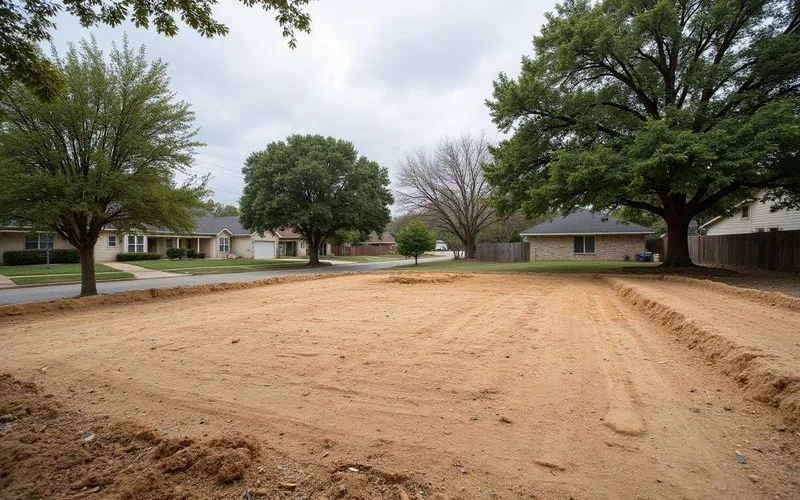
We focus heavily on controlling water flow across the prepared property. Proper grading ensures water flows away from the future foundation and toward appropriate municipal storm drains. Central Texas frequently experiences flash flooding from intense weather patterns.
“Proper grading is the cheapest foundation insurance a property owner can buy.”
The city enforces strict rules for impervious cover and stormwater management that must be addressed in the grading plan. Our grading plans, including professional cleanup and regrading, always account for local watershed rules. The Save Our Springs Ordinance limits impervious cover to as low as 15 percent in specific recharge zones.
Coordinating With Your Builder
Timing the Clearing
We prefer to schedule this work very strategically. Ideally, lot clearing happens after permits are approved but before any other site work begins. Clearing during the dormant winter months between December and February reduces stress on preserved trees.
Clearing too early in the spring storm season can lead to massive topsoil erosion. Our scheduling coordinators suggest booking the heavy equipment two to four weeks before the planned construction start date. This buffer prevents unexpected delays from derailing the entire build.
Utility Location
We strictly enforce a policy to verify every underground line before a machine touches the dirt. State law requires calling Texas 811 at least 48 hours before any excavation begins. Austin has a massive network of underground gas, water, electric, and communication lines.
- Texas 811: Required for primary public utility markings.
- Austin Energy: Critical for high-voltage electrical grid verifications.
- Austin Water: Important for locating older, shallow water lines.
Hitting one of these main lines is dangerous and results in massive repair bills. Our crews take extra precautions in older neighborhoods. These areas often have utility lines buried just 18 to 24 inches deep.
Access Planning
We map out the logistics of getting heavy machinery onto the property long before day one. Large clearing equipment requires adequate access to the lot. Dump trucks and excavators typically need a minimum clearance of 12 feet in width and 14 feet in height.
Discuss access routes with your builder and the clearing crew to avoid damaging neighboring properties or existing driveways. Our drivers know that tight, heritage-tree-lined streets demand careful maneuvering. Neighborhoods like Tarrytown often require special traffic control plans.
Environmental Considerations
Erosion Control
We implement erosion prevention strategies before the first tree comes down. The city requires specific measures on any cleared lot to protect local waterways. Silt fencing must be trenched at least six inches into the ground according to the Environmental Criteria Manual.
A stabilized construction entrance requires a 50-foot pad of large bull rock to prevent tracking mud onto city streets. Our teams ensure these systems stay in place and receive regular maintenance throughout the entire build. Failing a city environmental inspection will shut down a job site instantly.
Debris Disposal
We prioritize sustainable disposal methods for all cleared vegetation. All brush and stump material must be properly processed or recycled. Hauling off a 40-yard dumpster of wood debris typically costs $600 to $800 per load in 2026.
Many companies chip small wood on-site to create mulch. Our preferred method is to haul larger logs to facilities like Texas Disposal Systems. This diverts waste to commercial composting programs instead of sitting in a landfill.
Wildlife Considerations
We conduct environmental checks to identify protected habitats on the property. Central Texas is home to several protected species, including cave-dwelling invertebrates and specific nesting birds. The Golden-cheeked Warbler nesting season runs from March 1 to September 1.
- Golden-cheeked Warbler: Nesting season severely restricts clearing timelines.
- Cave-dwelling invertebrates: Often found in the porous limestone of West Austin.
- Endangered salamanders: Highly protected near specific aquifer recharge zones.
These federal protections heavily influence land clearing schedules in western Travis County. Our planners reference the Balcones Canyonlands Conservation Plan to understand the exact mitigation rules. A formal wildlife survey is often mandatory before clearing can proceed in these sensitive zones.
Cost Estimates for Lot Clearing in Austin
Typical Price Ranges
We provide transparent pricing based on the specific site conditions. Lot clearing costs in Austin vary widely based on the density of vegetation, lot size, and soil type. The 2026 market rates reflect the specialized equipment required for this work.
| Lot Size and Condition | Estimated 2026 Price Range |
|---|---|
| Lightly wooded quarter-acre lot | $3,000 to $6,000 |
| Moderately wooded half-acre lot | $6,000 to $15,000 |
| Heavily wooded one-acre lot | $15,000 to $30,000 |
| Stump removal for construction (per stump) | $200 to $800 |
These estimates cover tree removal, brush clearing, and basic grading. Our quotes do not include soil testing, erosion control installation, or municipal permit fees. Every project requires a custom assessment to pinpoint the exact final cost.
Ways to Reduce Costs
We frequently help property owners find efficiencies in the clearing process. Working with a stump grinding professional who handles both tree removal and stump grinding cuts down on equipment mobilization fees. Leaving chipped wood on the property to use as landscaping mulch can save $500 to $1,000 in hauling charges.
Getting multiple quotes is always a smart move. Our data shows that scheduling the work during the slower winter months can sometimes yield better pricing. Bundling services is the easiest way to stretch your construction budget.
Getting Started With Your Lot Clearing Project
We know that starting a new build is a massive undertaking. A professional site assessment is the best first step for any project involving lot clearing for new construction in Austin.
An experienced crew will walk your property, flag potential issues with heritage trees, and review the soil conditions. You need an accurate estimate before you commit to a timeline.
For the extraction portion of your project, contact Austin Stump Grinding Pros for a free assessment.
We work alongside builders and homeowners throughout the metro area to keep projects moving. Coordinating the stump extraction phase with your master schedule prevents costly delays.
Check out our yard clearing services for more details on how we handle large-scale site preparations.
Jake Mitchell
ISA Certified Arborist & Stump Removal Specialist
Jake Mitchell is an ISA Certified Arborist with 12 years of experience in Central Texas tree services. He specializes in stump grinding, root system management, and yard restoration for Austin-area homeowners.
Ready to Remove That Stump?
Get a free, no-obligation quote from a vetted Austin stump grinding professional today.