Pecan Tree Stump Removal in Central Texas: What You Should Know
Everything about pecan tree stump removal in Central Texas. Root system challenges, cost factors, and why pecan stumps need specialized handling.
Jake Mitchell
ISA Certified Arborist & Stump Removal Specialist
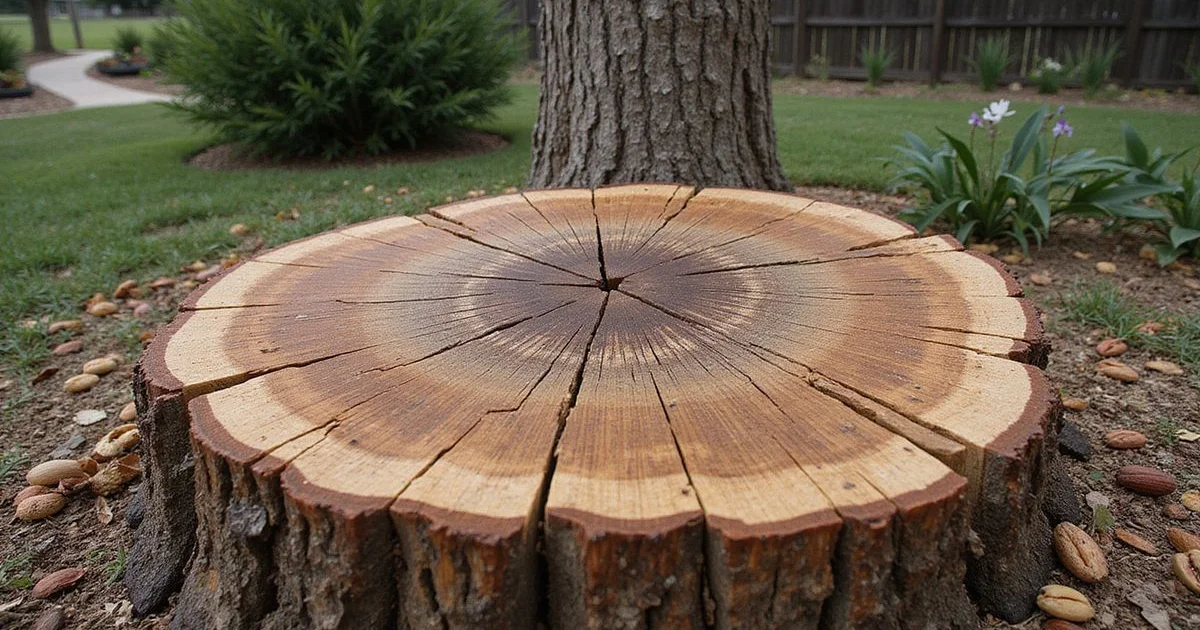
Our crews handle pecan tree stump removal in Central Texas every day, and what you should know is that this job always requires a different approach. You know how some landscaping tasks look completely straightforward until you actually break ground.
Removing the official state tree fits perfectly into that category. We constantly see property owners caught off guard by the sheer density of the wood. The incredibly hard heartwood and massive root networks make these stumps distinctly different from a standard pine or cedar.
Let’s explore the biological traits that make pecan wood so challenging and review the specialized equipment needed for the job.
Our team will then walk through the specific limestone soil issues in Austin and share practical ways to manage the final costs.
Pecan Tree Stump Removal in Central Texas: What You Should Know Before Digging
We consider pecan trees to be members of the hickory family, sharing that incredibly dense heartwood. A mature pecan stump can measure 24 to 48 inches in diameter. This wood density dulls grinder teeth much faster than softer species.
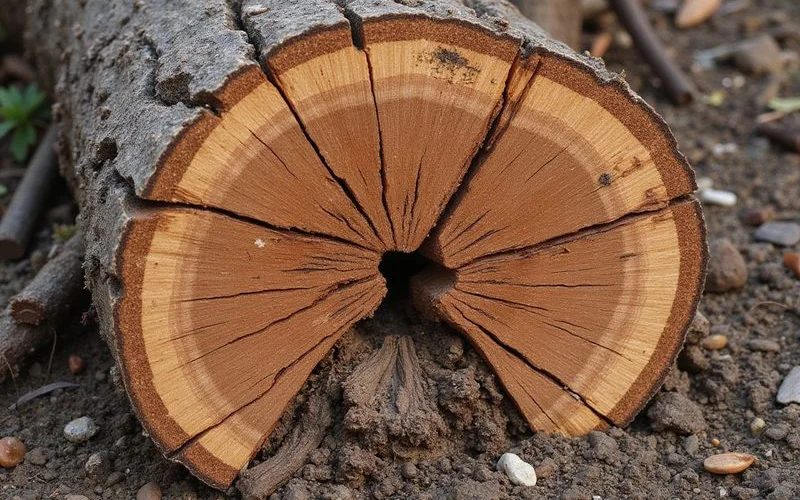
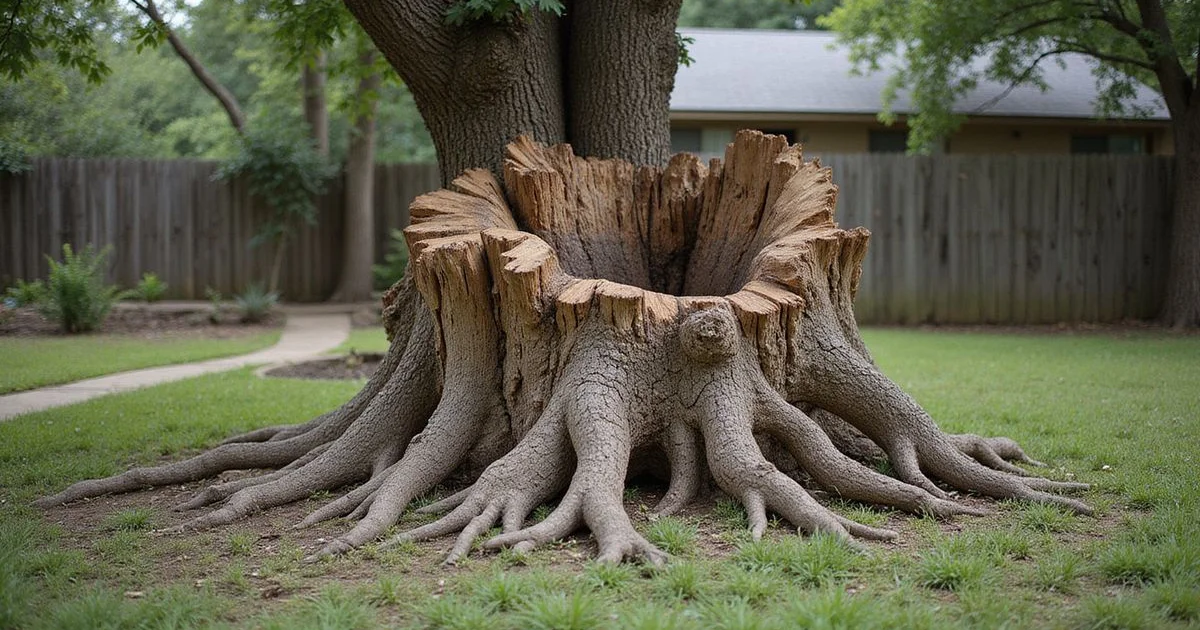
Our specialists pay close attention to the distinctive root system. Commercial nurseries often sever the deep taproot before planting, forcing the tree to develop aggressive horizontal sinker roots instead. A 1934 landmark study by Woodroof and Woodroof found that a 12-year-old pecan tree with a 17-foot canopy actually had a lateral root spread of 47 feet.
We frequently see these lateral roots running close to the surface in shallow soils. They spread incredibly wide as they search for moisture. This wide network requires specialized attention during the grinding process.
Root System Challenges in Central Texas Soil
Our daily operations across Austin require us to work with a challenging mix of expansive clay and limestone bedrock. The Edwards Plateau region sits just west of I-35. Soil depth in this area is often just two to three inches before hitting solid calcareous rubble and bedrock.
We know that pecan roots cannot easily penetrate this deep limestone. Almost 90 percent of the root system stays in the top 36 inches of soil, spreading out like a massive, flattened disk. The operator must account for these surface roots when grinding.
Managing Surface Roots
Our root removal service addresses the entire root system to prevent future foundation or driveway issues. You must always call Texas811 to mark underground utility lines before tackling these wide surface networks. These lateral roots frequently wrap around shallow pipes.
We also encounter stones mixed directly with the wood inside cracks in the bedrock. This combination demands commercial-grade equipment to avoid destroying the machinery. Standard residential blades simply cannot survive the impact of hitting hidden rock.
Wood Density and Grinding Considerations
Our teams always factor the incredible hardness of the wood into the job timeline. Pecan wood boasts a Janka hardness rating of 1,820 pounds-force. This rating makes it significantly harder than common yard trees like Eastern White Pine, which sits at just 380 pounds-force.
We plan for significantly longer grinding times per inch of stump diameter. A 30-inch pecan stump might take 45 to 60 minutes to clear. A pine stump of the exact same size might be finished in 20 minutes.
Equipment Requirements for Dense Wood
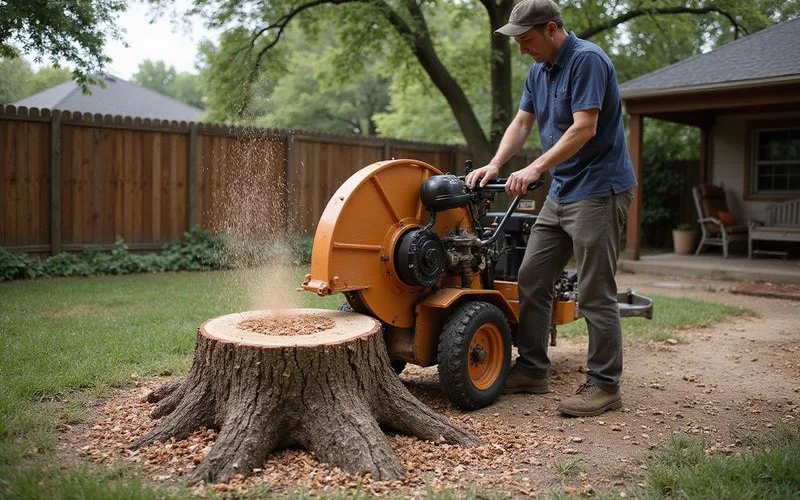
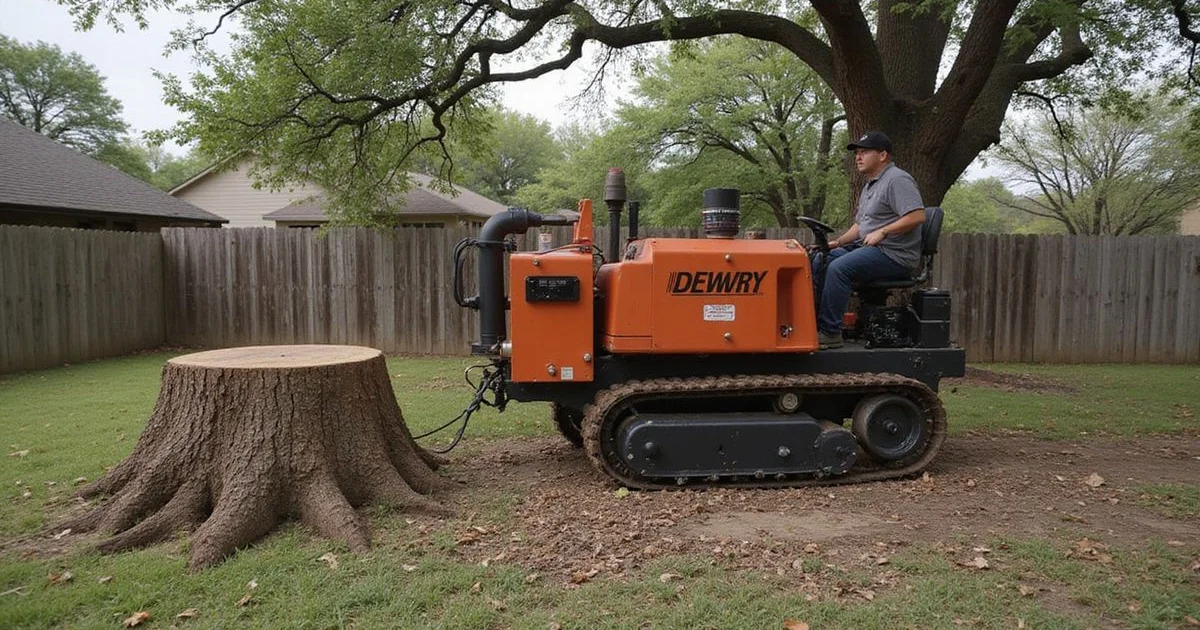
Our crews utilize high-horsepower machines to power through this dense material. Professional 74-horsepower Vermeer or Rayco grinders handle the impact much better than standard consumer rentals. These machines feature specialized tungsten carbide teeth, like the Greenteeth 900 Series, to cut through the 1,820 Janka wood.
We often hear clients ask why pecan jobs cost more than standard stump grinding services. Renting a 25-horsepower grinder from a local hardware store is a common mistake. You will likely shatter the rental teeth on the dense wood or hidden limestone, turning a one-hour job into an all-day struggle.
Pecan Allergies and Wood Chip Disposal
Our booking agents always remind property owners that pecan wood chips can trigger unexpected health issues. Pecan is a tree nut species. Airborne sawdust generated by 2,000 RPM grinder wheels can cause contact dermatitis or respiratory flare-ups in sensitive individuals.
We include a mandatory check for any tree nut allergies in the household before arriving. This allows the crew to plan for complete chip removal rather than leaving the debris as mulch. Pecan wood chips behave very differently than standard mulch materials.
Managing Debris and Decomposition
Our field observations show that these incredibly dense chips take two to three full years to completely decompose. As they break down, they cause nitrogen tie-up by pulling essential nutrients out of the surrounding soil. You should mix these chips with a high-nitrogen fertilizer if you plan to reuse them.
We strongly recommend using this material strictly for walking pathways. Keep the wood far away from acid-sensitive plants. This dense material is not suitable for typical garden beds.
Cost Factors for Pecan Stump Removal
Our estimators base the final price of removal on several distinct, verifiable factors. Standard stump grinding across Texas averages between $2 and $5 per diameter inch. Dense hardwoods like pecan almost always push the higher end of that pricing scale.
Stump Diameter and Root Extent
We treat the physical size of the remaining wood as the primary cost driver. The base price covers the main trunk section. Chasing wide surface roots typically adds 30 to 50 percent to the initial quote.
| Stump Size Category | Average Diameter | Estimated Price Range |
|---|---|---|
| Small Stumps | Under 12 inches | $100 to $200 |
| Medium Stumps | 12 to 24 inches | $200 to $350 |
| Large Stumps | 24+ inches | $350 to $500+ |
Our staff highly recommends measuring the stump at ground level to get an accurate estimate. Extensive root systems near walkways demand careful, slower work. Hauling away the massive pile of heavy pecan chips usually adds another $50 to $100.
Access, Location, and Volume
We find that wide-open backyards provide the easiest and most affordable access. A stump wedged between a fence and a patio requires smaller equipment and manual labor. Tight spaces often necessitate a large stump removal specialist with versatile gear.
Our company offers volume discounts if you need to clear an entire remnant orchard. Removing three to five stumps in one visit drops the mobilization cost. This efficiency reduces the per-stump price by 15 to 25 percent.
Best Season for Pecan Stump Removal in Austin
We perform grinding year-round, but specific seasons offer major strategic advantages. Late fall through early spring provides the absolute best conditions. Cooler temperatures make the demanding physical labor much more efficient.
Our scheduling peaks between November and March for this exact reason. Check our stump grinding equipment guide to understand why machine selection matters for dense hardwoods. The Texas A&M AgriLife Extension recognizes February as the ideal month for planting new bare-root trees. Clearing the old stump in winter prepares your soil perfectly for a February replacement.
We advise against scheduling this heavy work during the peak of an August drought. The baked clay and limestone become brick-hard without regular rain. This dryness increases equipment wear and creates a much messier yard tear-up.
After the Stump Is Gone
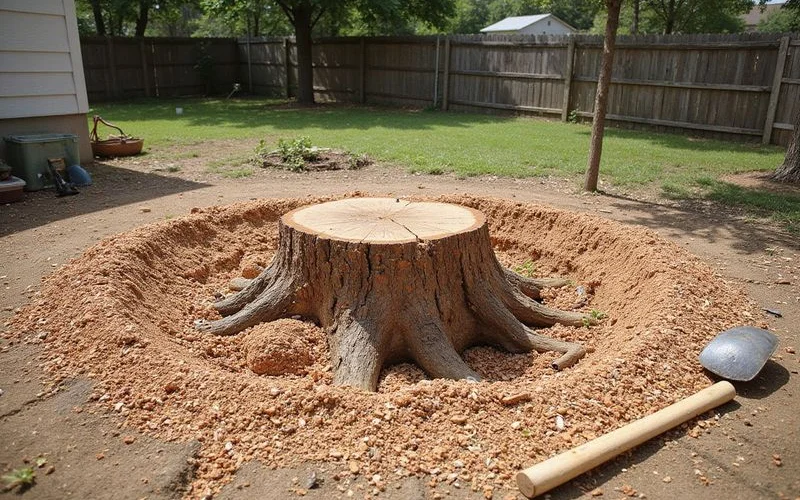
Our professionals help property owners prepare the empty site for future landscaping success. You will be left with a large depression filled with loose dirt and wood chips. Leaving a thick layer of dense pecan chips will stunt new plant growth for years.
We offer a complete cleanup and backfill service to ensure the area is graded correctly. You need a minimum of 6 to 12 inches of quality mineralized topsoil to establish new grass over the limestone bedrock. A sandy loam mix with 30 percent organic compost works perfectly on the Edwards Plateau.
Our arborists suggest choosing limestone-adapted native plants if you want to replace the tree. A Texas Cedar Elm or a Desert Willow will thrive much better in this shallow soil than another giant shade tree. These drought-tolerant species establish deep roots without destroying your lawn.
The Bottom Line
We know that pecan tree stump removal in Central Texas is never a basic weekend chore. What you should know is that the combination of 1,820 Janka wood, sprawling surface roots, and solid limestone demands serious commercial power. Airborne nut allergies add another layer of required safety planning.
Our experienced team brings the right 74-horsepower grinders and carbide teeth to finish the job safely. You deserve a clean, level yard that is ready for fresh planting. Please get a free estimate today to start reclaiming your landscape.
Jake Mitchell
ISA Certified Arborist & Stump Removal Specialist
Jake Mitchell is an ISA Certified Arborist with 12 years of experience in Central Texas tree services. He specializes in stump grinding, root system management, and yard restoration for Austin-area homeowners.
Ready to Remove That Stump?
Get a free, no-obligation quote from a vetted Austin stump grinding professional today.