Storm Damage Stump Removal: What Austin Homeowners Should Do First
Step-by-step guide for Austin homeowners dealing with storm-damaged stumps. Insurance tips, safety priorities, and how to get fast emergency service.
Jake Mitchell
ISA Certified Arborist & Stump Removal Specialist
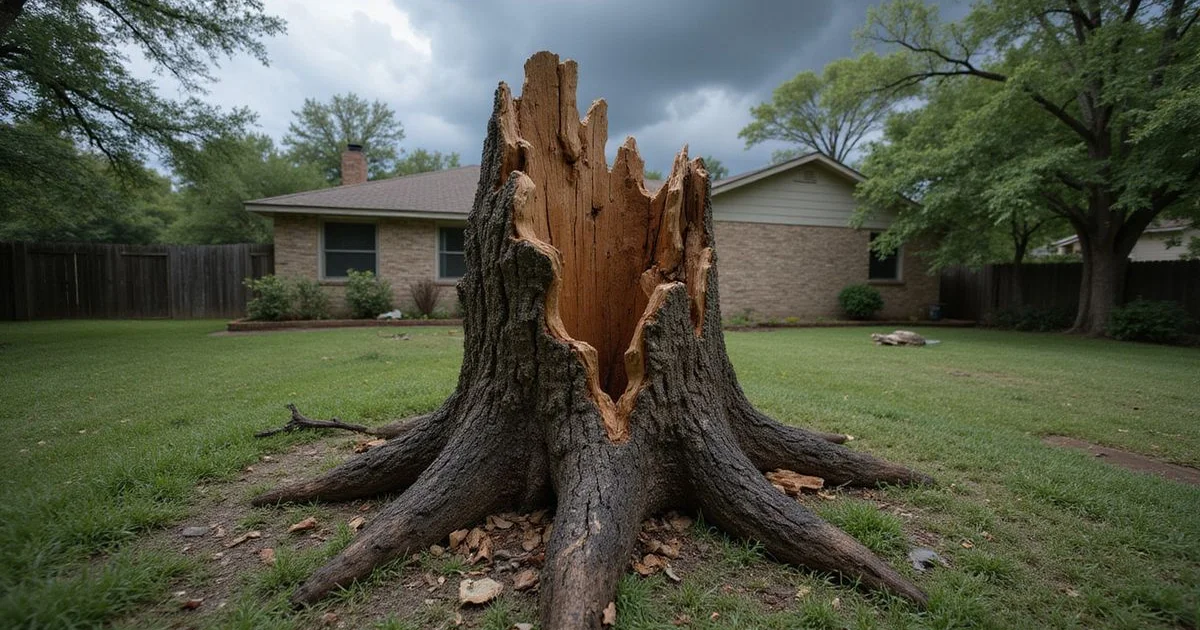
Anyone managing property in Central Texas knows our weather turns destructive in minutes. Regarding storm damage and emergency stump removal, what Austin homeowners should do first is assess the immediate safety risks.
We have seen how severe storms leave local yards looking like disaster zones. State weather data from early 2025 alone recorded over 1,100 severe wind and hail reports across Texas.
The sheer volume of damage often leaves local emergency crews stretched incredibly thin.
Properly handling a damaged stump protects your property and maximizes your insurance payout.
Our professional tree service team responds to these chaotic aftermaths year after year. This guide breaks down the exact steps to secure your yard and speed up the recovery process.
Storm Damage Stump Removal: What Austin Homeowners Should Do First for Safety
We always tell clients to pause and observe before stepping into a damaged yard. Storm-damaged trees and uprooted stumps hide severe hazards beneath the surface.
A quick visual sweep from your porch prevents life-threatening accidents.
Check for Downed Power Lines
Our crews treat any fallen wire as a live, deadly threat. Austin Energy strictly advises staying at least 35 feet away from downed lines.
Electricity fans out through the wet ground in a wide circle. Rubber-soled shoes will not protect you from the voltage.
We urge you to call Austin Energy at 512-322-9100 or dial 911 immediately if you spot a downed wire. Never attempt to move branches resting near an electrical hazard.
Watch for Structural Instability
Gravity and wind create massive tension inside a partially fallen tree. We frequently encounter split trunks and leaning stumps that snap with zero warning.
Trying to cut a tree leaning against your roof or fence usually results in worse structural damage. Heavy limbs store kinetic energy like a coiled spring.
Our arborists use specialized rigging equipment to safely dismantle these unpredictable hazards. Leave the chainsaw in the garage and let experts handle the high-risk cuts.
Look for Gas Line Damage
Massive root plates easily rip underground utilities right out of the soil. We see this frequently in older Austin neighborhoods with shallow gas lines.
You must evacuate the immediate area if you smell sulfur or hear a distinct hissing noise. Call Texas Gas Service at 800-959-5325 from a safe distance.
Our team also recommends calling 8-1-1 before anyone starts grinding or digging near the stump. A quick call to 8-1-1 provides critical benefits:
- Locates buried gas mains
- Identifies underground electrical wires
- Prevents catastrophic neighborhood emergencies
Step Two: Document Everything for Insurance
Thorough documentation is the secret to a smooth insurance payout. We watch too many property owners skip this step in their rush to clean up the mess.
Securing photographic evidence locks in your proof before the debris gets hauled away.
What to Photograph
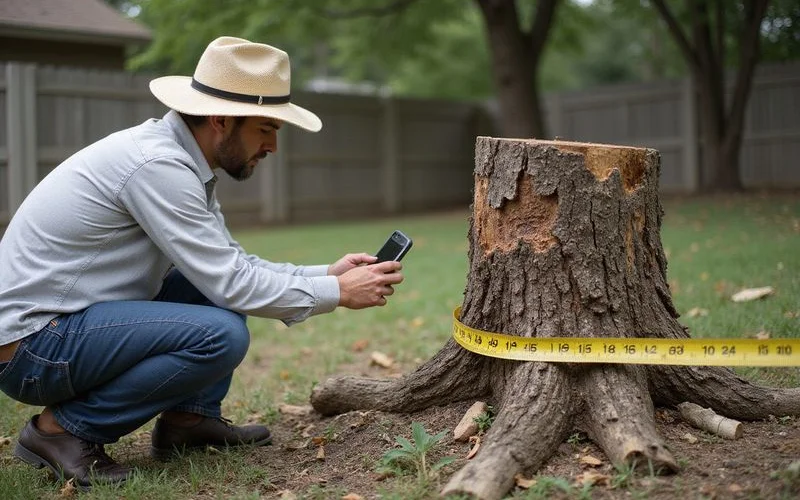
Your smartphone camera is your best tool for building a solid claim. We advise taking clear videos that walk around the entire perimeter of the damage.
Make sure to capture these specific details for your adjuster:
- The entire fallen trunk and exposed root plate from a wide angle
- Close-up shots of the splintered wood at the break point
- A tape measure stretched across the stump to show its exact diameter
- Any crushed fences, shattered driveways, or damaged vehicles
- Broken irrigation pipes or ruined landscaping features
- Property lines if the tree fell across a shared boundary
Keep a Written Record
A timeline of events gives your insurance adjuster valuable context. Our front office staff always asks clients for the exact date and time the storm hit.
Write down a brief summary of what you saw and heard during the event. Collect contact information from any neighbors who witnessed the tree coming down.
We suggest keeping copies of any receipts for emergency board-up materials or temporary fencing. These initial out-of-pocket expenses are usually reimbursable.
Understand Your Coverage
Texas insurance policies follow very strict rules regarding tree debris. We want you to know that coverage almost always requires the tree to land on a covered structure.
Insurers typically cap debris removal at $500 to $1,000 per tree. This payout usually falls under your policy’s debris removal sublimit, maxing out around 5% of your total dwelling coverage.
Our billing experts know that trees falling harmlessly into an open yard are rarely covered. You will likely pay out of pocket if the fallen trunk missed your house, garage, or fence.
Call your agent immediately to verify your limits before authorizing any expensive grinding work.
| Scenario | Typical Insurance Status |
|---|---|
| Tree hits house or garage | Covered (Subject to policy limits) |
| Tree blocks main driveway | Often Covered (Impedes access) |
| Tree falls in open yard | Not Covered (Out of pocket expense) |
Step Three: Assess the Hazard Level
Panic often drives property owners to overpay for immediate service. We help our clients categorize the damage to avoid unnecessary rush fees.
Evaluating the actual threat level helps you prioritize the cleanup logically.
True Emergencies That Need Same-Day Service
Immediate intervention is necessary when safety or basic access is compromised. Our emergency crews prioritize dispatches based on these specific high-risk criteria:
- The massive root ball completely blocks your driveway or garage
- A jagged trunk leans directly at a bedroom window or neighboring roof
- Uprooted root flares expose or stretch underground utility lines
- The debris creates a blind spot or tripping hazard on a public sidewalk
If you face any of these critical threats, immediate action is required. Our emergency stump removal service provides same-day response throughout the Austin metro area to eliminate these dangers. Fast action protects your family from further harm.
Situations That Can Wait a Few Days
Standard scheduling works perfectly fine for low-risk aesthetic issues. We often advise clients to wait a few days if the stump poses no immediate threat.
You can safely delay service for these common scenarios:
- The base sits entirely inside an open backyard with no target structures nearby
- A broken trunk remains firmly rooted and completely stable
- The surface roots ruined a flower bed but missed the foundation
- You have several small, unthreatening stumps scattered across a large property
Patience saves you money on weekend or after-hours dispatch fees.
Austin’s Storm Season and What to Expect
The local climate forces properties to endure extreme environmental stress. We prepare our equipment for specific weather patterns that roll through Texas annually.
Understanding these seasonal shifts helps you anticipate potential landscaping damage.
Spring (March through May)
Spring ranks as the most violent period for Texas weather. Our schedules fill up rapidly during these volatile months.
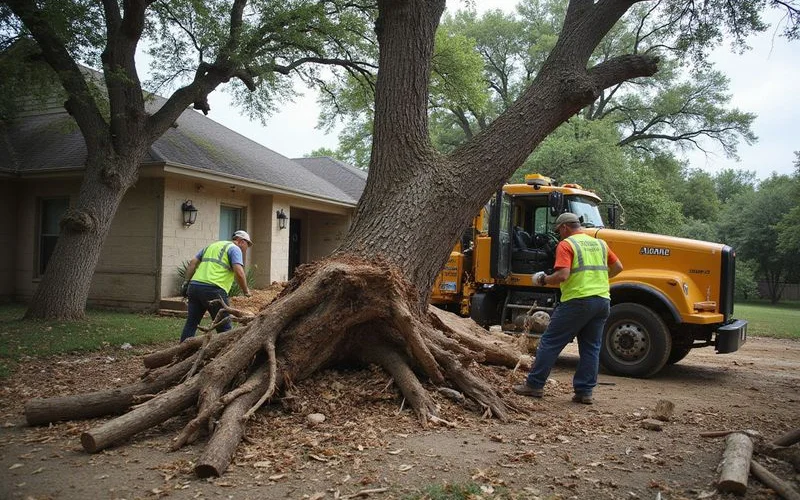
A massive microburst in May of 2025 slammed Austin with 85 mph winds, knocking out power to over 72,000 customers. These sudden supercells generate straight-line winds that easily snap mature hardwoods.
We clear away dozens of uprooted root systems after every major May thunderstorm. Large properties often require full yard clearing after these events. The saturated spring soil makes tall trees incredibly vulnerable to tipping over.
Summer (June through August)
Scorching heat waves severely damage structural root networks. We notice that drought-stressed trees lose their mechanical grip in the dirt.
A sudden August downpour turns that dry dirt into a slick mudslide. The canopy acts like a giant sail during intense summer microbursts.
Our stump grinders work overtime handling massive Live Oaks that simply collapsed under their own weight. Live Oak wood presents unique grinding challenges:
- High wood density dulls cutting teeth quickly, often requiring large stump removal equipment
- Massive surface root systems extend for yards
- Requires significantly more equipment fuel and time
Fall and Winter (September through February)
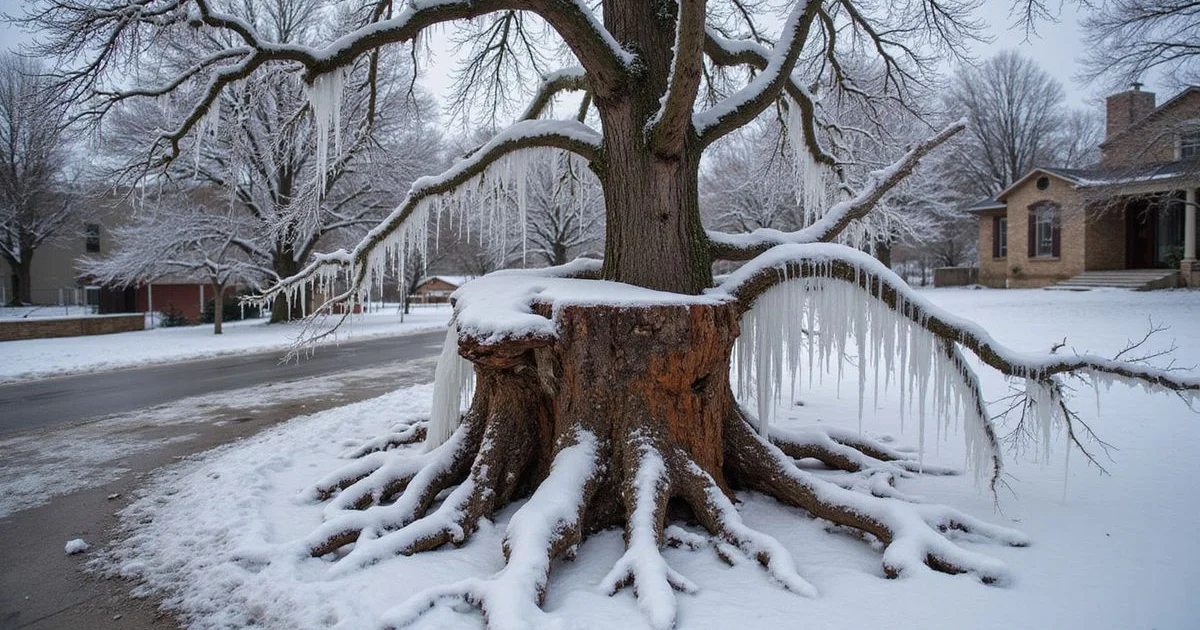
Winter weather brings a completely different type of structural failure. We respond to catastrophic canopy damage when freezing rain coats the branches.
The severe ice accumulation from recent winter storms added thousands of pounds to local trees. Heavy ice loading causes massive limbs to tear away from the main trunk.
Our crews spend weeks cleaning up the shattered bases left behind by these freezing fronts. Read our ice storm tree damage recovery guide for winter-specific advice. Regular pruning before winter arrives significantly reduces the risk of branch failure.
The Insurance Claim Process for Storm Damage
Managing a property claim requires a strategic, organized approach. We guide hundreds of property owners through this exact administrative maze.
Following a strict protocol prevents adjusters from denying your reimbursement.
Here is the proven process for handling a storm-related claim effectively:
- Contact your insurer within 24 hours: Prompt notification establishes the timeline and satisfies strict reporting deadlines.
- Request itemized estimates: Average grinding costs in Austin range from $150 to $500 per stump. Ensure the bid separates the grinding cost from the haul-away fee.
- Gather multiple quotes: Obtain at least two written estimates from fully licensed local companies.
- Save all emergency receipts: Keep physical and digital copies of invoices for temporary tarping or hazard tape.
- Reject unsolicited offers: Never sign a contract with a door-to-door crew offering immediate, high-priced clearing services.
Organizing your paperwork upfront dramatically speeds up the final approval. Our office staff gladly provides the detailed itemization your insurance adjuster demands. Clear records make everyone’s job much easier.
Getting Fast Emergency Service in Austin
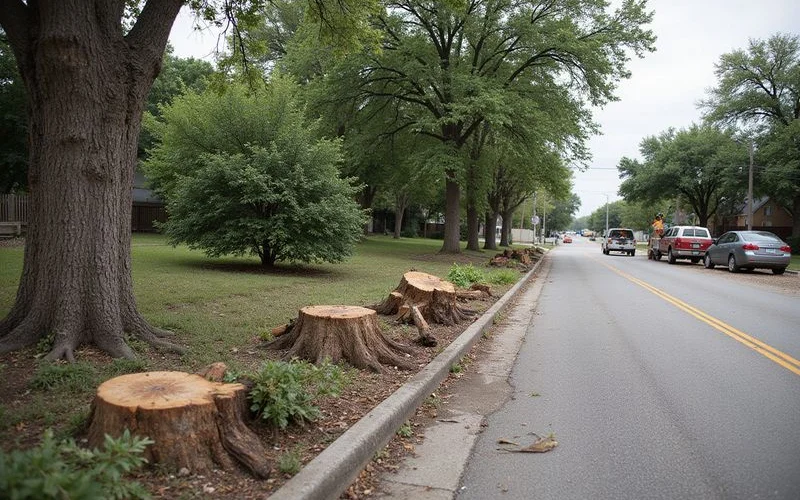
Local service schedules book out for weeks following a severe weather event. We dispatch our heavy equipment as quickly and safely as possible.
Securing a prompt appointment requires clear communication and quick action on your part.
Follow these strategies to secure a faster response time:
- Call early in the morning: Beat the afternoon rush by dialing the office right at opening time.
- Provide exact measurements: Tell the dispatcher the approximate diameter so they send the correct size grinder.
- Clearly state the hazard level: Emphasize if the trunk is threatening a structure or blocking a right-of-way.
- Demand a realistic timeline: Ask for a specific service window rather than accepting a vague promise.
Clear communication helps dispatchers route the heavy machinery efficiently.
Contacting Our Response Team
We maintain a dedicated emergency response line for urgent storm damage situations. The dispatch team prioritizes active calls strictly based on the immediate safety risk.
Our crews are ready to assess the damage and restore safety to your property. Delaying the call only pushes your property further down the waiting list.
For standard cleanup projects, our stump grinding services efficiently process bases of any size. The specialized grinding teeth chew through dense Texas hardwoods with ease.
We offer several benefits for non-emergency scheduling:
- Comprehensive free estimates
- Flexible weekday appointments
- Complete wood chip haul-away options
Take the first step to recovery and book your assessment today.
Conclusion on Storm Damage Stump Removal: What Austin Homeowners Should Do First
Proper cleanup requires a coordinated, careful effort. We hope this guide clarifies the recovery process.
When facing storm damage stump removal, what Austin homeowners should do first is prioritize safety and documentation.
Follow the exact guidelines to record your damage and secure fair compensation. Reach out to the dispatch team today to get your property cleared and safe again.
Jake Mitchell
ISA Certified Arborist & Stump Removal Specialist
Jake Mitchell is an ISA Certified Arborist with 12 years of experience in Central Texas tree services. He specializes in stump grinding, root system management, and yard restoration for Austin-area homeowners.
Ready to Remove That Stump?
Get a free, no-obligation quote from a vetted Austin stump grinding professional today.