How to Deal with Surface Tree Roots in Your Austin Yard
Practical solutions for dealing with surface tree roots in Austin yards. Grinding, covering, and removal options that protect both your lawn and your trees.
Jake Mitchell
ISA Certified Arborist & Stump Removal Specialist
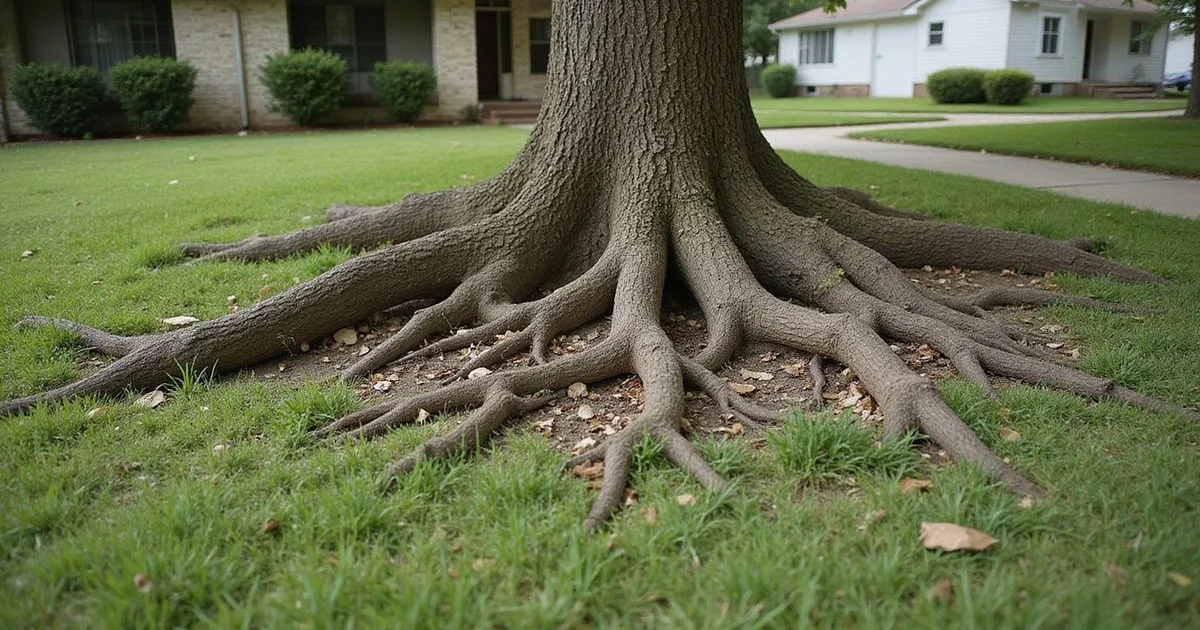
You probably know the frustration of tripping over thick roots that snake across your lawn. Those exposed wooden ridges ruin mower blades, create safety hazards, and turn basic yard maintenance into a massive headache.
As a professional service team in Austin, we hear these exact complaints from property owners every single week. Understanding how to deal with surface tree roots in your Austin yard requires a careful balance between safety and tree health.
Grabbing an axe might seem like a quick fix.
That rushed decision can easily kill a valuable heritage tree. Our goal today is to break down why this happens and walk you through the most effective ways to fix the issue. Let’s examine the soil data, explore practical DIY fixes, and outline exactly when you need professional equipment.
Why Roots Come to the Surface
Surface roots rarely mean a tree is unhealthy or failing. They are actually a perfectly natural survival response to the challenging ground conditions found across Central Texas. We constantly see trees adapting to their environment by sending roots upward to find essential moisture and oxygen.
Shallow Soil Over Limestone
A massive portion of Travis County sits directly on the Edwards Plateau. This geological formation features solid limestone bedrock hiding just under the grass. Our crews often find only 6 to 18 inches of topsoil before hitting an impenetrable layer of rock.
Plant roots cannot drill through solid stone, so they are forced to grow sideways and eventually push above the surface. The thinner the dirt layer, the more severe the exposure becomes.
Soil Compaction
Heavy foot traffic and years of riding lawnmowers quickly pack down the region’s dense clay. This extreme compaction squeezes all the tiny air pockets out of the ground. We notice that roots simply cannot push downward into soil that feels like concrete.
Seeking oxygen, the root system stays right at the surface where air and water remain accessible.
Species Tendencies
Certain tree varieties possess naturally aggressive, shallow root systems. You will see this trait most often in specific species planted across local neighborhoods. We frequently encounter these common offenders during our daily service calls:
- Live Oak: The undisputed king of surface roots in Central Texas. Mature live oaks often push huge runners 30 to 50 feet away from the main trunk.
- Hackberry: A fast-growing tree equipped with a notoriously shallow base. These dominate neighborhoods built in the 1970s and 1980s.
- Cedar Elm: A fantastic native option, but one that struggles in tightly compacted residential lawns.
- Chinese Tallow: An invasive species carrying highly aggressive surface runners.
- Arizona Ash: Extensively planted during the 1990s and now infamous for wrecking sidewalks.
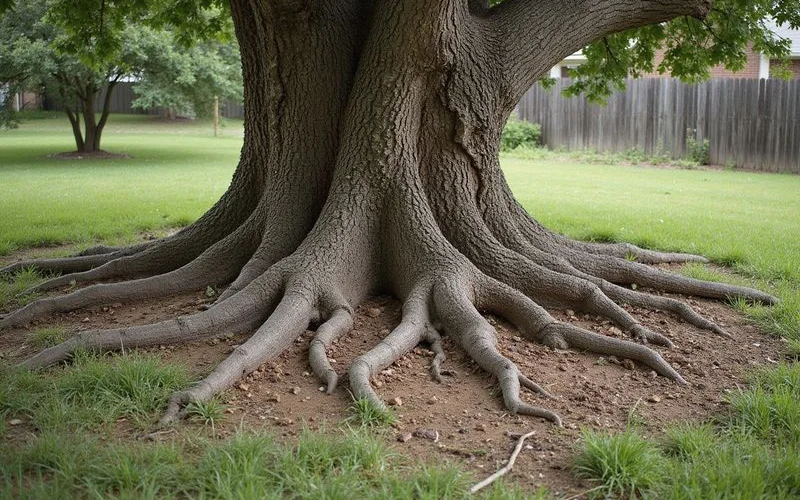
How to Deal with Surface Tree Roots in Your Austin Yard Using DIY Methods
Minor nuisance roots rarely require heavy machinery to manage. Several gentle landscaping adjustments can dramatically improve your lawn’s appearance while protecting the tree. We always recommend trying a non-invasive method first if the structural integrity of your concrete is safe.
Adding Topsoil Over Roots
Covering minor exposure with a thin layer of high-quality dirt is an incredibly simple fix. Spreading 2 to 3 inches of fresh soil allows you to reseed the area smoothly.
Our arborists must warn you against burying roots too deeply, as this cuts off their oxygen supply. Never dump more than 3 to 4 inches of material at one time. Smothering the base will essentially suffocate the tree, so add material gradually across multiple growing seasons.
Mulching the Root Zone
Transitioning a bumpy lawn into a dedicated mulch bed is arguably the most tree-friendly solution available. The City of Austin actively recommends applying 3 to 4 inches of coarse arborist wood chips over the affected zone. We love this strategy because it mimics the natural environment of a forest floor.
- Eliminates the need to mow over dangerous bumps.
- Shields delicate bark from string trimmer damage.
- Traps vital moisture during brutal Texas summers.
- Looks like an intentional, beautiful landscape feature.
Creating a large mulch ring around a sprawling live oak saves time and ends the frustrating battle for grass growth.
Creating Raised Pathways
High-traffic areas require a different approach if roots block a vital walking route. Installing a raised stepping stone path or a wooden boardwalk provides safe passage directly over the obstacle.
We suggest this method for tight side yards where massive roots cross the property line from a neighbor’s lot. Bridging the gap completely avoids the need to cut anything.
When Professional Root Grinding Is Needed
Do-it-yourself tricks fall short when dealing with massive structural interference. Our technicians step in when heavy-duty root removal becomes the only viable option. Consider hiring a professional if you face any of these severe situations:
- Concrete is buckling. Dirt and mulch cannot fix a driveway or patio slab lifted by underground pressure.
- Tripping hazards exceed 3 inches. Massive wooden ridges require mechanical reduction for basic yard safety.
- Construction requires a flat grade. Installing a new playset or pouring a foundation demands a completely level surface.
- The tree is gone but the base remains. Persistent growth from an old stump will ruin future landscaping plans.
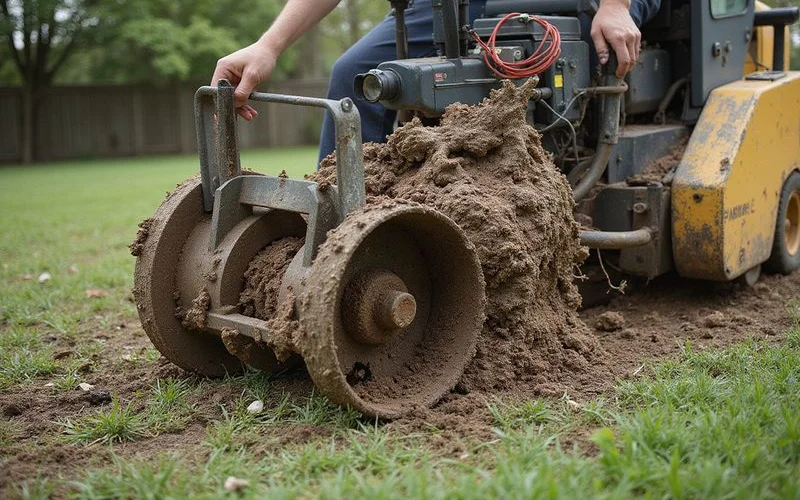
How Surface Root Grinding Works
Specialized machinery is required to shave thick, woody material down below the soil line. This targeted process acts much like standard stump removal, but it focuses on individual runner lines instead of the central base. We utilize powerful grinders to carefully reduce the peak from 4 inches above the grass to 4 inches below ground level.
The trenched area is then backfilled with clean dirt and prepared for fresh sod. Having clear pricing expectations helps homeowners make informed property decisions.
| Job Size | Estimated Cost in Austin | Typical Time Required |
|---|---|---|
| Small (Under 12 inches) | $100 to $200 | 15 to 30 minutes |
| Medium (12 to 24 inches) | $200 to $350 | 30 to 60 minutes |
| Large (Over 24 inches) | $350 to $500+ | 1 to 2 hours |
The Critical Rule: Never Remove More Than 25 Percent
Reckless cutting directly threatens the life and stability of any mature tree. Industry guidelines strictly dictate that no more than 25 percent of a total root system can be removed at once. Our certified arborists strictly adhere to the Austin Tree Protection Ordinance, which regulates impacts to the critical root zone of trees 19 inches or larger in diameter.
Slashing too many structural anchors leaves a massive canopy vulnerable to falling during the next major thunderstorm. If a tree falls, you may need emergency stump removal to clear the hazard quickly. Professional assessment guarantees that only non-essential feeder sections are eliminated.
Protecting Remaining Trees During Removal
Safeguarding the tree’s health is paramount once the cutting begins. We follow a highly specific protocol to ensure the surrounding canopy survives the trauma. Proper execution prevents disease and encourages rapid recovery.
- Identify the exact target. Map out precisely which sections are causing damage and which must stay untouched.
- Make perfectly clean cuts. Using a sharp grinder prevents tearing, allowing the wound to seal off quickly.
- Apply appropriate wound treatment. Painting fresh cuts on live oaks is a mandatory precaution against the spread of oak wilt in Central Texas.
- Execute the backfill and regrading process. Fill any empty voids with premium compost to prevent water from pooling near the trunk.
- Monitor for stress. Watch the canopy closely for wilting or early leaf drop over the next 12 months.
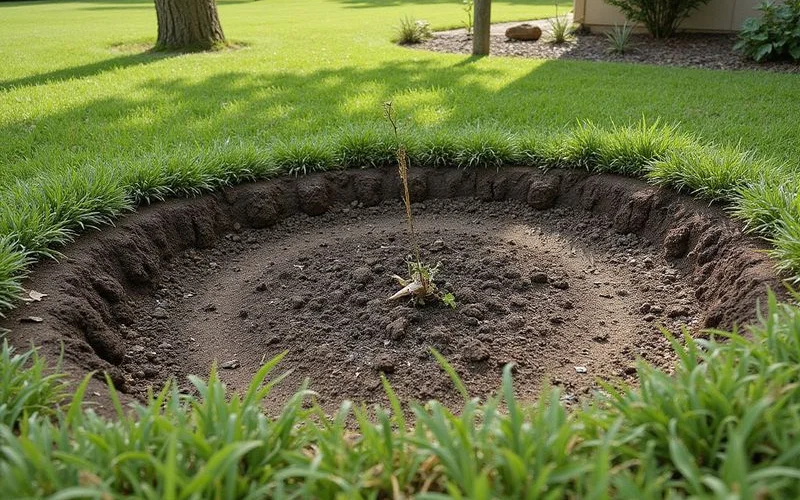
Prevention for New Plantings
Strategic planning prevents future headaches before a sapling even touches the dirt. Making smart choices today ensures your landscape remains smooth and hazard-free for decades. Our landscape designers highly recommend taking these proactive steps during your next installation:
- Select deep-rooted alternatives. Bur oak, bald cypress, and Texas mountain laurel naturally dig deeper than hackberries.
- Import high-quality soil. The Travis County AgriLife Extension suggests providing at least 6 to 12 inches of deep soil to encourage downward growth.
- Install underground barriers. Placing a physical shield around the planting hole forces new growth downward immediately.
- Protect the planting zone. Keep heavy machinery far away from the area to prevent artificial soil hardening.
Finding the Right Solution
Mature canopies provide incredible shade and beauty to our local neighborhoods. Dealing with the occasional exposed runner is simply a tradeoff for living in such a beautifully forested environment. We know that figuring out how to deal with surface tree roots in your Austin yard feels overwhelming at times.
Fortunately, almost every situation can be resolved through strategic mulching, careful shaving, or targeted extraction. You can also explore our guide on tree roots damaging foundations in Austin for related structural concerns. Stop letting those jagged wooden ridges dictate how you use your property.
If exposed runners are lifting your concrete or ruining your lawn, contact our team for a free evaluation. Reach out today, and let an expert safely restore your outdoor space.
Jake Mitchell
ISA Certified Arborist & Stump Removal Specialist
Jake Mitchell is an ISA Certified Arborist with 12 years of experience in Central Texas tree services. He specializes in stump grinding, root system management, and yard restoration for Austin-area homeowners.
Related Articles
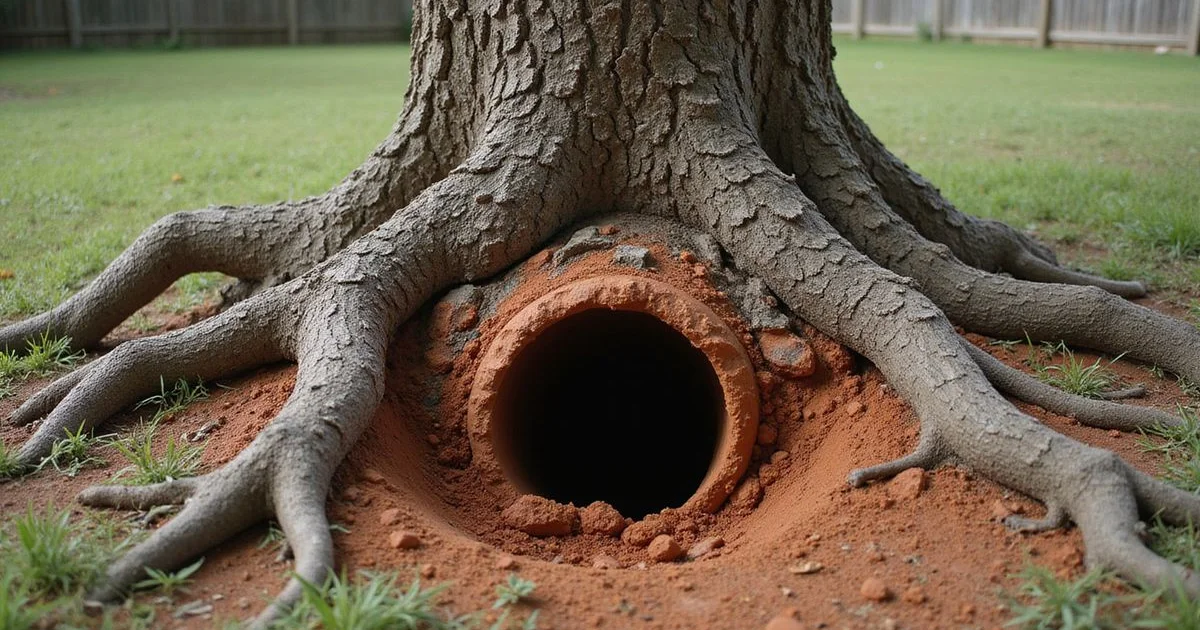
Can Tree Roots Damage Sewer Lines? A Guide for Austin Homeowners
Dec 20, 2025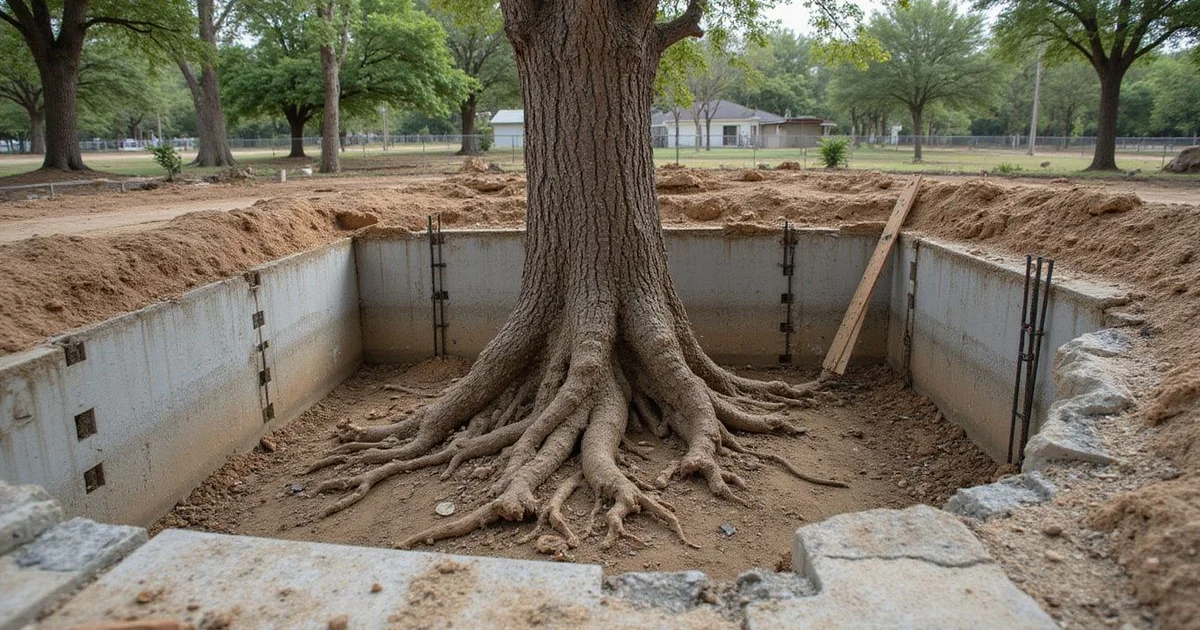
Root Removal Before Construction: What Austin Builders Need to Know
Jan 15, 2026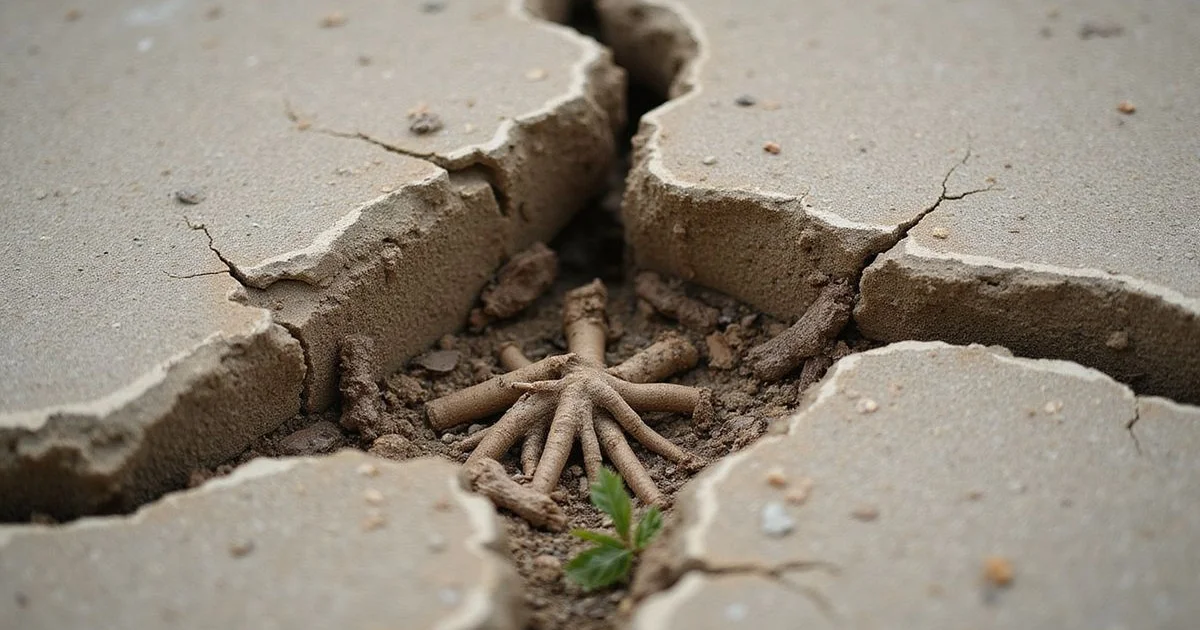
Are Tree Roots Damaging Your Foundation? Signs Austin Homeowners Should Watch For
Feb 12, 2026Ready to Remove That Stump?
Get a free, no-obligation quote from a vetted Austin stump grinding professional today.