Are Tree Roots Damaging Your Foundation? Signs Austin Homeowners Should Watch For
Learn to spot the warning signs of tree root foundation damage in Austin, TX. Expert advice on diagnosis, prevention, and when root removal is necessary.
Jake Mitchell
ISA Certified Arborist & Stump Removal Specialist
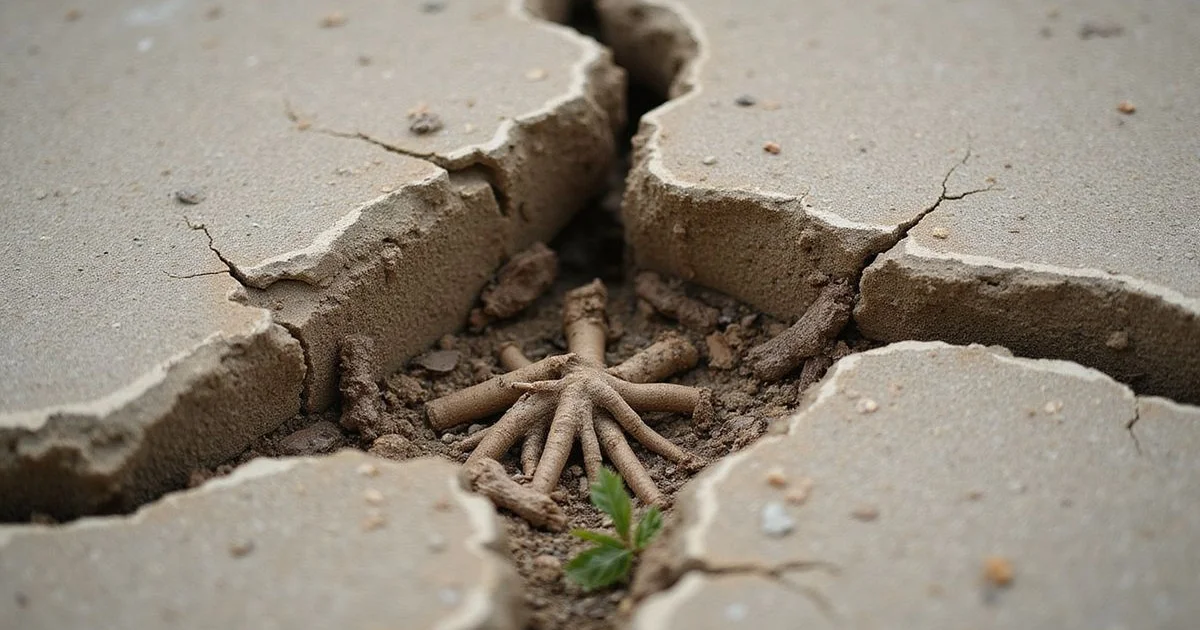
Our team constantly sees property owners blindsided by massive structural repair bills. Current 2026 data shows moderate fixes averaging $3,300 to $7,000, while extensive steel pier stabilization easily exceeds $20,000.
Tree roots are frequently the hidden catalyst behind these massive expenses. Are tree roots damaging your foundation? It is a common question, and there are specific signs Austin homeowners should watch for.
We know that mature trees rarely break concrete physically, but they completely manipulate the moisture in the ground. Let’s examine the exact mechanism behind this damage and outline the specific warning signs you need to monitor.
Are Tree Roots Damaging Your Foundation?
Our professionals often hear the misconception that roots act like wedges to crack concrete. This physical lifting only happens in rare cases with massive, old trunks pressed right against the siding.
The primary mechanism of damage in Central Texas is actually moisture manipulation. We see this subtle process cause thousands of dollars in structural damage every year.
The Moisture Draw Effect
Trees absorb enormous quantities of water from the earth surrounding your property. We regularly observe mature live oaks pulling 100 to 150 gallons of water per day during the summer growing season.
This rapid extraction causes the soil to shrink quickly. The dirt pulls away from the concrete, removing the vital support your slab requires.
We call this process differential settlement. One section of the building sinks while others remain stable. The resulting stress produces the classic cracking and misalignment that worsens over each seasonal cycle.
Austin’s Expansive Clay Problem
Our crews deal with some of the most volatile geology in the United States. The region sits heavily on Taylor Black Clay and Del Rio Clay.
These smectite group clays act like giant underground sponges. We want property owners to understand how these specific soil types behave.
“During the severe summer heat, Taylor Black Clay can lose up to 30 percent of its volume as it dries out, creating massive voids directly beneath concrete slabs.”
This natural shrink-swell cycle already places immense stress on concrete. We see the damage multiply rapidly when thirsty tree roots enter the equation.
The roots aggressively pull moisture from one localized side of the structure. This accelerates the differential movement and creates severe structural cracking.
Signs Austin Homeowners Should Watch For
Our field inspectors know that foundation damage develops gradually. Early detection stops minor settling from becoming a major structural failure. Property owners should monitor the building for these specific indicators.
Interior Signs
We check the inside of the home first for subtle shifts.
- Doors that stick or drag. If interior doors suddenly start rubbing at the top or bottom, the frame has shifted out of square.
- Cracks in drywall above frames. Diagonal cracks radiating from the corners of window and door openings are classic indicators of movement.
- Uneven or sloping floors. We suggest placing a marble on your hard flooring to see if it rolls consistently toward one wall.
- Gaps at the ceiling or baseboards. These junctions separate visibly as the floor drops away from the walls.
Exterior Signs
Our exterior inspections focus heavily on rigid building materials.
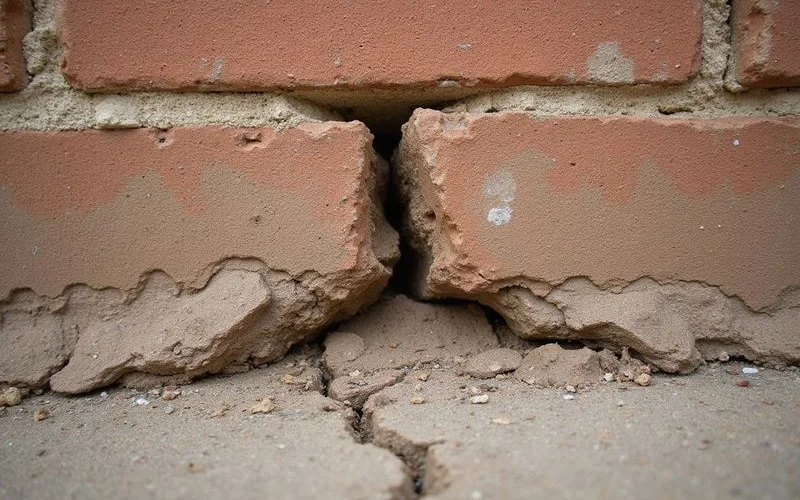
- Stair-step cracks in brick mortar. These follow the mortar joints in a jagged pattern and prove the slab beneath has dropped.
- Gaps around exterior window frames. We frequently find daylight shining through new gaps along the caulking lines. Roots can also infiltrate underground plumbing, as we explain in our guide on tree roots damaging sewer lines.
- Visible separation at the slab edge. Check the exterior base where the concrete slab meets the siding or brick veneer.
- Tilting chimneys or porches. These attached structures often show movement first because they rest on smaller, shallower footings.
Yard Signs
We look closely at the landscaping immediately surrounding the structure.
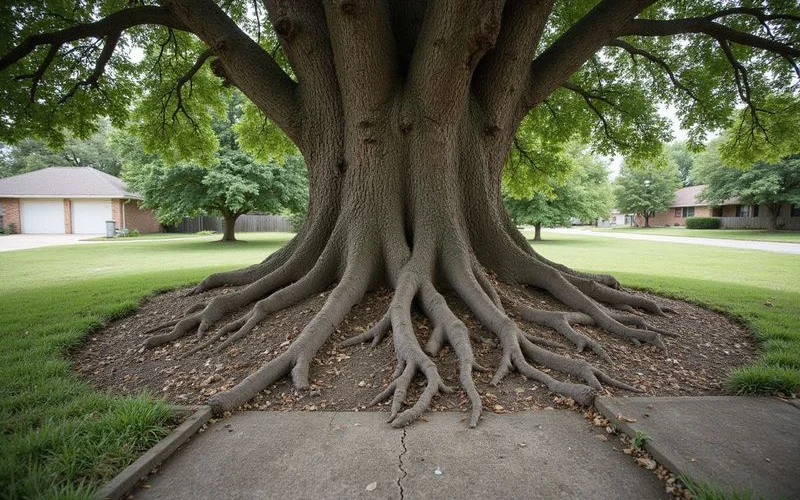
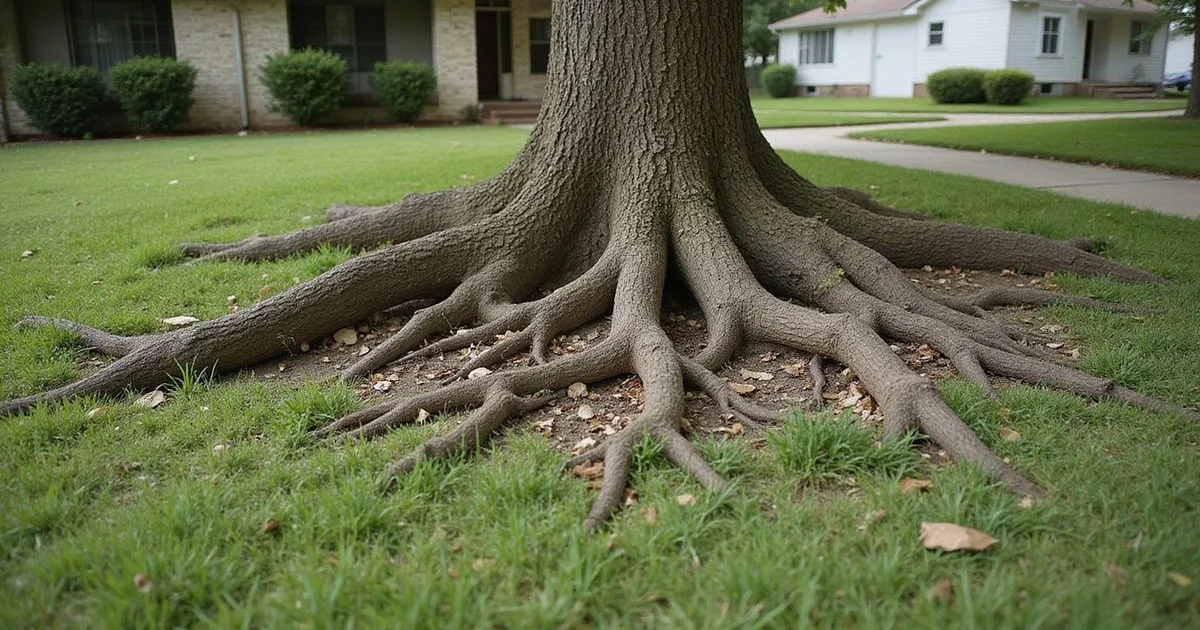
- Visible roots heading toward the house. If surface roots from a nearby tree trend toward your walls, subsurface roots are almost certainly under the slab.
- Soil pulling away from the perimeter. We often spot a distinct gap between the dirt and the concrete edge during droughts, which indicates extreme soil shrinkage.
- Cracked sidewalks near trees. While not directly a structural issue, this demonstrates the immense force roots exert on concrete flatwork.
Which Austin Trees Cause the Most Foundation Damage?
Our arborists evaluate tree risk based on root spread, water demand, and growth speed. Not all species pose an equal threat to your property.
The table below outlines the most common local species and their corresponding risk profiles.
| Tree Species | Risk Level | Water Demand & Root Habit | Safe Distance |
|---|---|---|---|
| Live Oak | High | Extracts 100+ gallons daily with massive lateral roots. | 25 to 30 feet |
| Hackberry | High | Fast growth with aggressive, shallow surface roots. | 20 to 25 feet |
| Pecan | High | Deep taproots paired with wide-spreading lateral feeders. | 25 feet |
| Cedar Elm | Moderate | Moderately aggressive and highly common in native landscapes. | 15 feet |
| Arizona Ash | Moderate | Fast-growing, shallow roots that aggressively seek water. | 15 to 20 feet |
| Crepe Myrtle | Low | Compact root system relative to canopy size. | 8 to 10 feet |
| Texas Mountain Laurel | Low | Very slow growth with a tight, non-invasive root structure. | 5 to 8 feet |
When to Remove Roots vs. When to Monitor
We do not automatically suggest cutting down every tree near a building. The correct response depends on the proximity, the species, and the current condition of the slab. Sometimes, aggressive action is the only way to save the structure.
Root Removal Is Likely Needed When
Our team recommends root removal in a few specific scenarios.
- Active damage is visible. If the building shows fresh cracks and a high-risk tree sits within 20 feet, the roots are a likely culprit.
- An engineer confirms moisture draw. A licensed structural expert has identified localized soil shrinkage caused by vegetation.
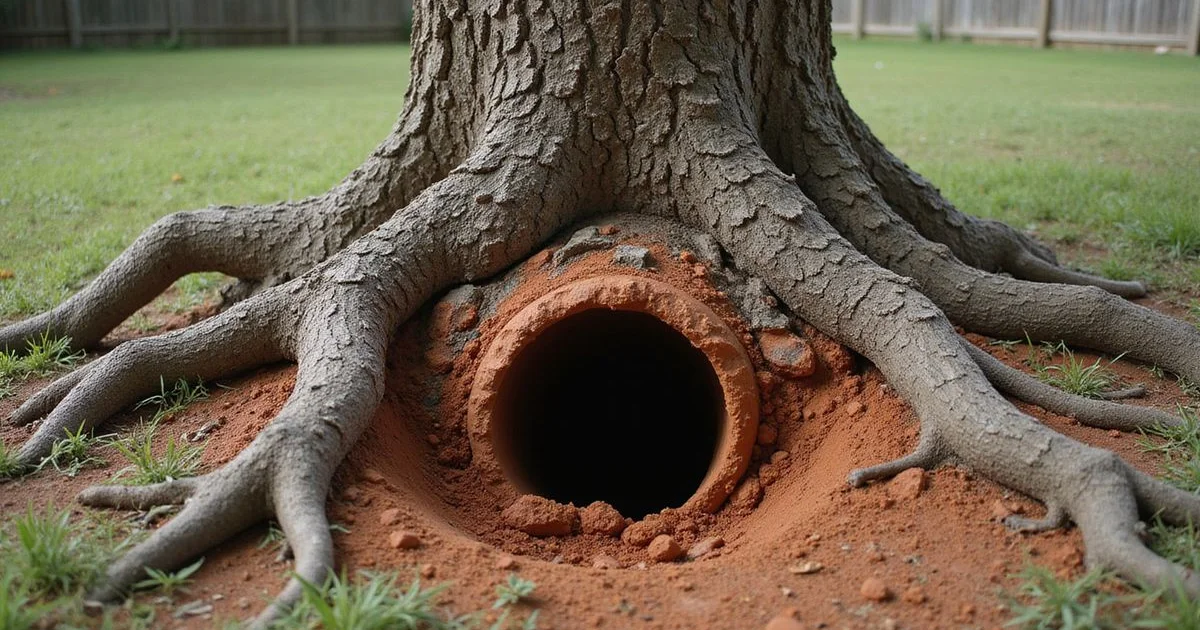
- Decaying old roots are present. We warn clients that even after a tree is cut down, the dead roots decay and leave hollow voids in the soil. Proper stump grinding followed by backfill prevents this issue.
- Hardscape displacement occurs. Root growth is physically lifting or shattering driveways right next to the house. Professional cleanup and regrading restores the area after root extraction.
Pro-Tip: Never cut down a massive live oak without consulting a professional. We have seen cases where sudden tree removal caused the dry clay to rapidly absorb water and swell, resulting in catastrophic “heaving” that cost $8,000 to fix.
Monitoring May Be Sufficient When
We prefer to leave healthy trees intact whenever safely possible.
- The tree sits at a safe distance. Large trees located more than 25 feet away rarely cause significant moisture issues.
- The structure remains perfectly level. No signs of sticking doors or drywall cracks are present.
- The tree provides immense property value. We understand that heritage oaks provide shade and curb appeal that owners want to preserve.
The Root Barrier Option
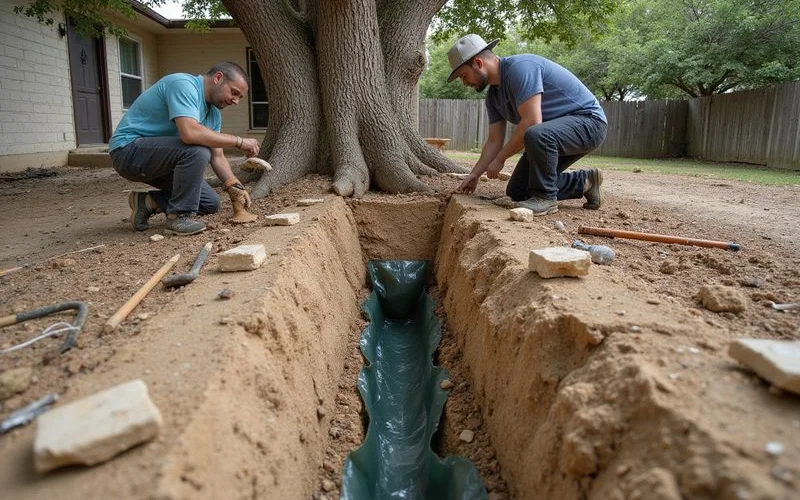
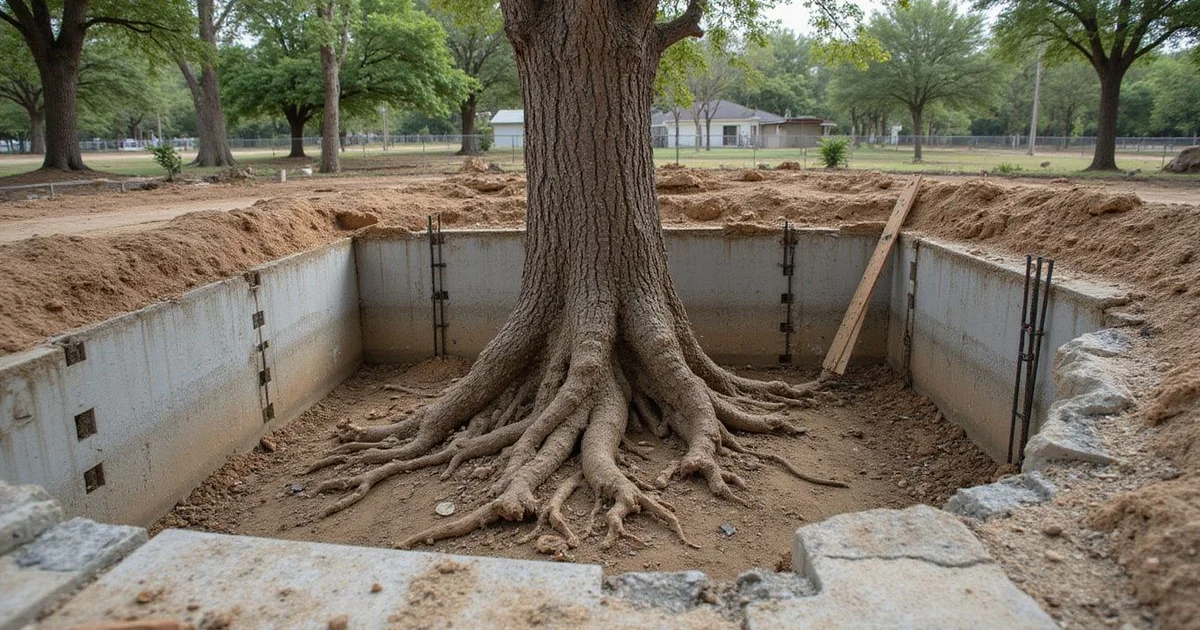
Our specialists frequently install root barriers as a cost-effective compromise. Professional installation averages around $65 per linear foot in the current market, typically totaling $1,500 to $3,000. These systems allow you to protect the concrete while keeping the tree alive.
We generally utilize two primary types of protective panels. Active systems like BioBarrier feature a specialized fabric that slowly releases Trifluralin to safely halt root cell division. Passive options rely on thick, high-density plastic panels to physically deflect growth downward into the deep subsoil.
Working with Foundation Engineers
Our experts always recommend a coordinated approach between arborists and structural engineers. Guessing at the cause of settlement leads to wasted money and ineffective repairs. A clear sequence of action protects the property and your wallet.
- Get an independent inspection first. We see average 2026 engineer fees ranging from $450 to $850 for a comprehensive evaluation. A licensed structural engineer provides an unbiased assessment of the damage.
- Have an arborist evaluate the trees. Once the engineer identifies the direction of the settlement, an arborist can pinpoint the specific roots causing the moisture draw.
- Address roots before adding piers. We warn clients that lifting a house over active, thirsty roots will just result in future failure. Removing the problematic roots or installing a barrier must happen before the concrete work begins.
- Mandate a post-repair plumbing test. Lifting a settled concrete slab puts immense stress on old underground pipes. Our protocol strongly suggests paying $350 to $600 for a hydrostatic pressure test. This ensures no water lines broke during the lift, preventing new leaks from ruining the repair.
Protecting Your Investment
Our team knows that ignoring early warning signs costs thousands of dollars in the long run. Austin’s volatile clay and mature tree canopies create a perfect storm for structural damage. Proactive monitoring and smart root management will save the concrete slab from catastrophic failure.
We recommend reaching out for a professional evaluation before the next dry season hits. If you are still wondering, are tree roots damaging your foundation, carefully review the signs Austin homeowners should watch for, and schedule a root assessment with a local expert today.
Jake Mitchell
ISA Certified Arborist & Stump Removal Specialist
Jake Mitchell is an ISA Certified Arborist with 12 years of experience in Central Texas tree services. He specializes in stump grinding, root system management, and yard restoration for Austin-area homeowners.
Ready to Remove That Stump?
Get a free, no-obligation quote from a vetted Austin stump grinding professional today.